HighRes, CD-quality and MP3

How do they compare and how can tango DJs make informed decisions?

Digital audio discussions can become surprisingly ideological. Yet tango listening raises slightly different questions than traditional audiophile culture. A milonga is not a laboratory, nor a solitary headphone experience. It is a collective physical situation where sound, movement, memory and emotion continuously interact with one another, where recordings do not simply exist as isolated sonic objects but as part of a shared bodily and emotional environment unfolding between dancers inside the room.

My own supra-experience, however, remained somewhat less obvious.

The other day I witnessed two different DJs playing almost exactly the same Troilo repertoire. The first tanda felt strangely eventless and flat, barely audible emotionally despite technically correct playback. The second time it was as if the Troilo orchestra itself had briefly returned from the heavens to be physically present in the room with us. An extraordinarily strong experience, and one that already tells us something essential: most of the differences that truly matter in tango playback probably do not originate from sampling rates, file formats or audiophile specifications, but from the quality of the sources themselves, the transfers, the restorations, the mastering choices and ultimately the way recorded sound still manages to transmit human presence across time.
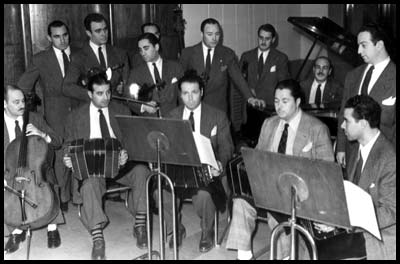
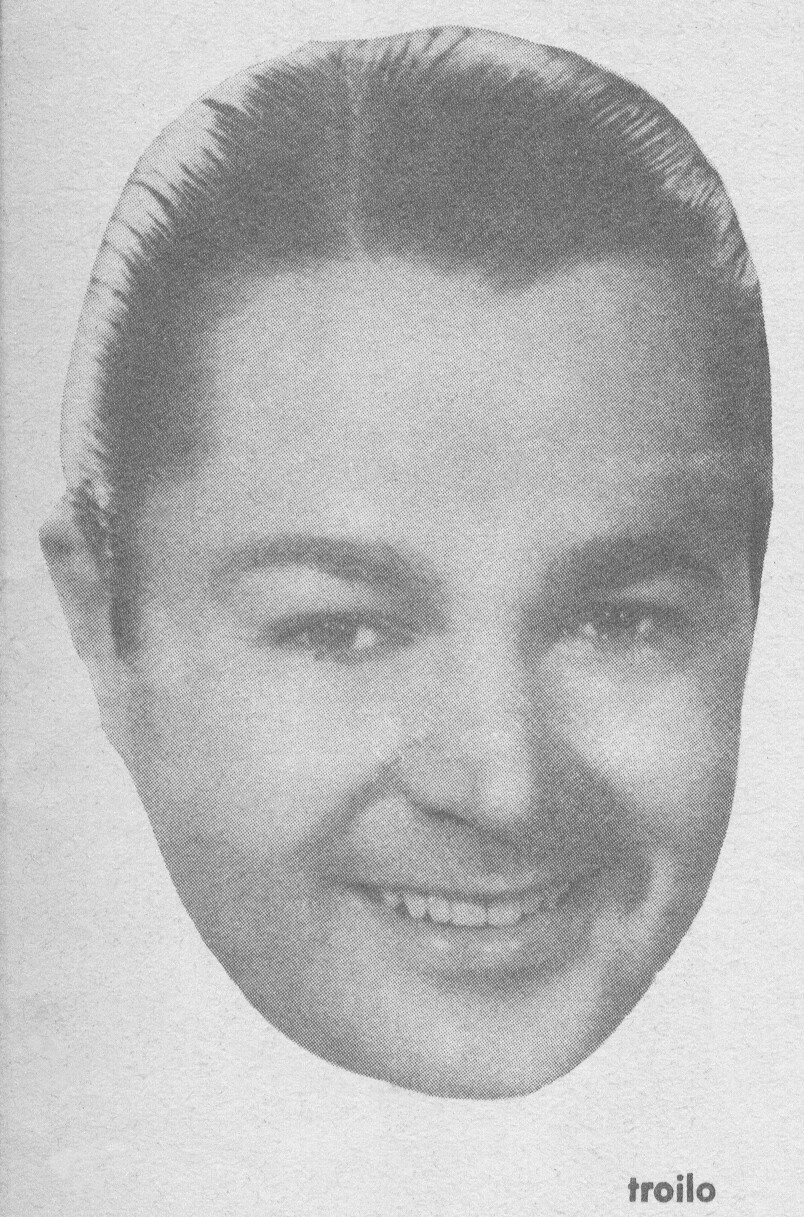
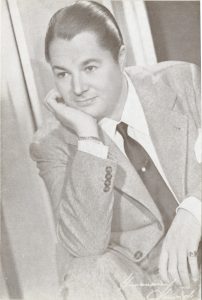
Anibal Troilo and his orchestra

Every tango DJ has experienced this strange moment: a recording that sounded perfectly acceptable at home suddenly collapses on a large milonga sound system. Violins become brittle, bandoneóns flatten out, rhythmic tension dissolves and somehow the room itself loses energy. And yet another recording, sometimes transferred from a noisy shellac nearly a century old, suddenly fills the room with an almost tangible presence.

Some time ago I visited a friend for a listening session around a rather impressive vintage hi-fi setup built around modified Altec Lansing loudspeakers equipped with additional supertweeters intended to reproduce ultrasonic frequencies far beyond the traditional audible spectrum. Curiously, whenever the music developed strong high-frequency passages, his two dogs would immediately begin singing along enthusiastically from their favorite position, a sweet spot in the room, apparently deeply moved by the experience. Their relationship to extended frequency response in Beethoven seemed considerably more direct than mine. My own supra-experience, however, remained somewhat less obvious.

The real question is therefore not whether your dog can theoretically hear ultrasonic frequencies above 40kHz, but why certain recordings suddenly come alive in a room full of dancers while others remain emotionally inert despite impressive technical specifications.

And maybe this already says something important about the way audio discussions often evolve today. I know that some DJs in online forums hold very strong opinions about playback chains, audio formats and technical specifications, sometimes almost as if certain formats automatically guarantee a fundamentally superior listening experience. But is it really that simple? What exactly is the relationship between the emotions we experience in a milonga and the technical specifications behind the playback system?
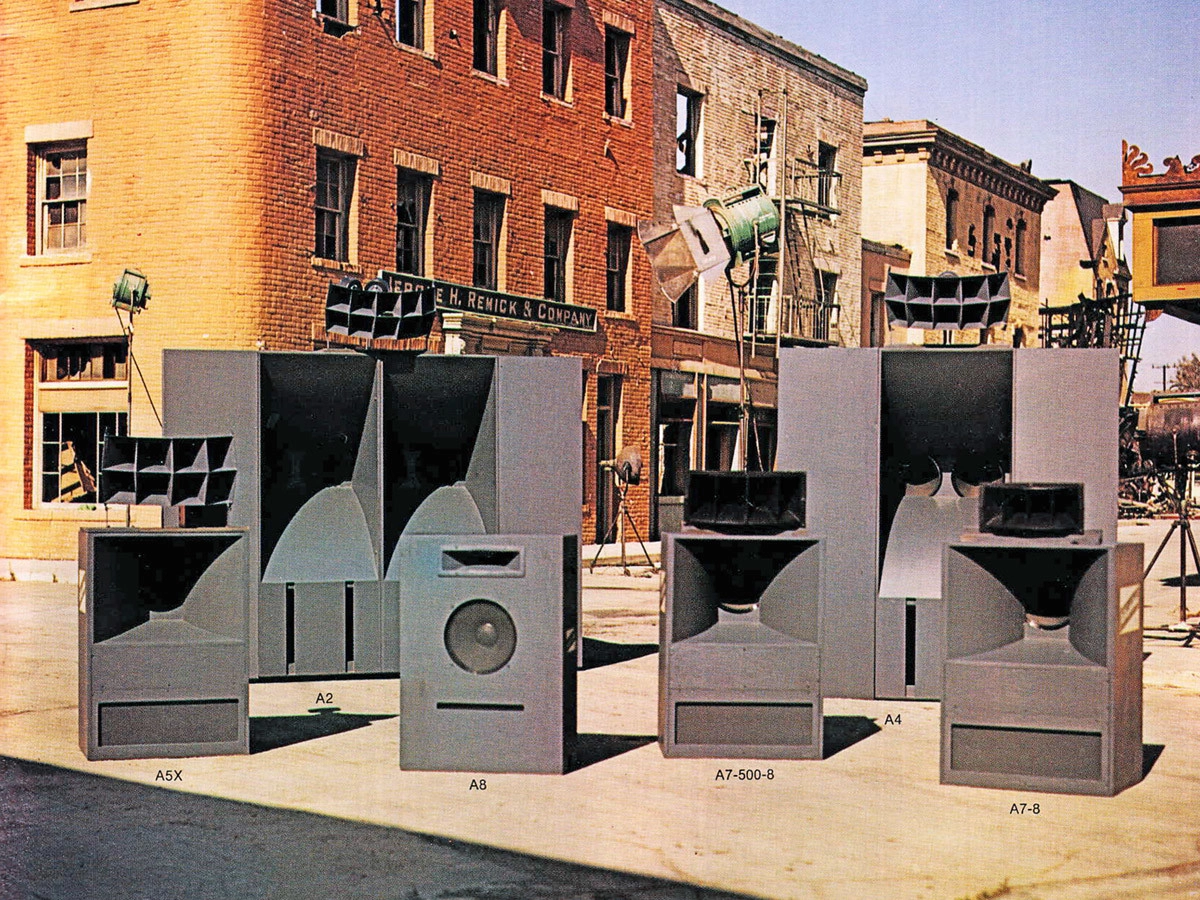
Altec Lansing speaker parade

To approach that question seriously, one first has to distinguish between several very different realities that are often confused in online audio debates: restoration workflows, archival preservation, home listening, streaming convenience and real-world milonga playback.

This article is therefore less concerned with proclaiming one format universally superior than with understanding how recordings behave inside real tango environments. Tango DJing is a practical, social and deeply physical art. A tango DJ does not play music into silence. The music enters a constantly moving social space filled with footsteps, breathing, room acoustics, conversations, wooden floors, glasses, clothing textures and shared emotional tension. The point is not isolated sonic purity somewhere under laboratory conditions, but what the orchestra physically does to the room once dancers are inside it.

Of course, another enormously important factor lies outside the immediate scope of this article: the sound system itself. PA quality, loudspeaker voicing, amplifier behaviour, room acoustics, speaker placement and venue characteristics often influence perceived musical quality far more dramatically than subtle differences between digital formats.
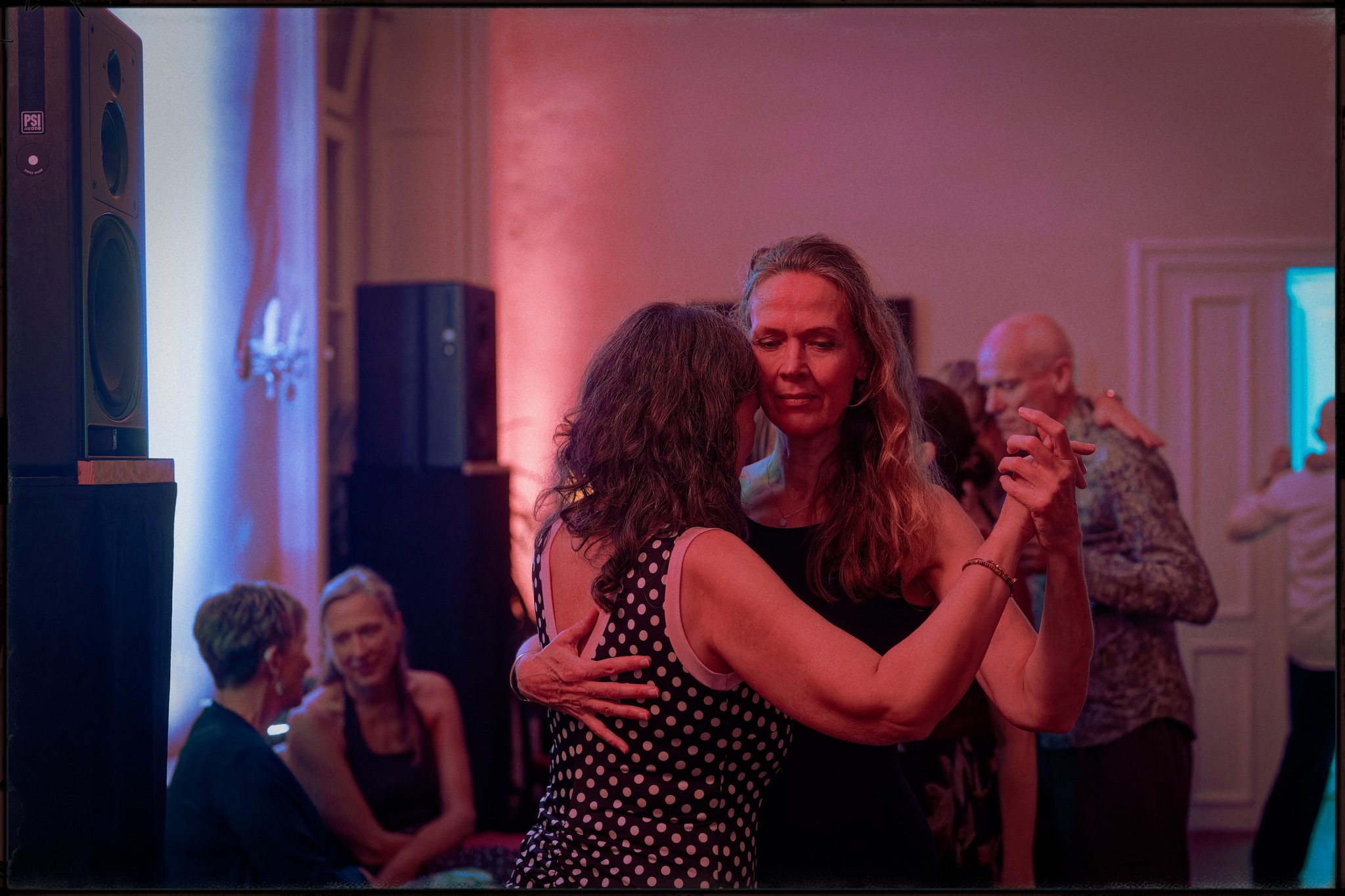
Any experienced tango DJ has encountered situations where an excellent recording sounded disappointing on a poorly configured system, while modest source material suddenly became emotionally convincing in a well-balanced room.

But precisely because this subject could easily fill an entire separate article on its own, let us temporarily treat the playback environment as a relatively fixed constant and focus instead on the part DJs more directly control themselves: the audio sources, formats, restorations and playback workflows.

The early trauma of digital audio

When I first listened to a CD in the mid-1980s at Martin’s house, may he rest in peace, I remember being deeply impressed by the apparent purity of the sound. Martin worked as a regional manager for EMI and had become an early adopter of the compact disc, with an already remarkable classical CD collection largely representing the EMI catalogue of the time.

No crackling background noise, no dust, no worn grooves, no gradual deterioration from repeated playback. Coming from vinyl, this felt almost futuristic and nearly like a dream come true.

At the time, depending on pressing quality and especially on how carefully records had been treated, vinyl collections would slowly accumulate more and more surface noise over the years. Sometimes this could become quite frustrating. And to be entirely honest, my own fine-motoric relationship with records at that age probably resembled more that of a frisbee player than that of a careful archivist. It took me years to understand that records actually require a certain degree of gentleness and discipline in handling.

So when the compact disc arrived, many listeners initially experienced it less as “cold digital sound” and more as liberation from the physical fragility of analogue media.

Only later did the criticism emerge. Some early CDs began to sound sterile, harsh or strangely lifeless compared to vinyl records and shellacs. But this was not necessarily because the CD format itself was fundamentally incapable of reproducing music correctly. The problem was often the technological context of the 1980s and early 1990s. DAC converters were still immature, anti-aliasing filters could sound aggressive, remastering techniques were primitive and excessive noise reduction often removed not only hiss and crackle but also part of the orchestra’s natural harmonic structure and room ambience.

Especially in tango, many early CD editions were produced rapidly from already existing tape copies or worn commercial discs, often without deep restoration work or historical research. As a result, many tango listeners associated “digital sound” with a loss of warmth, depth and emotional presence.
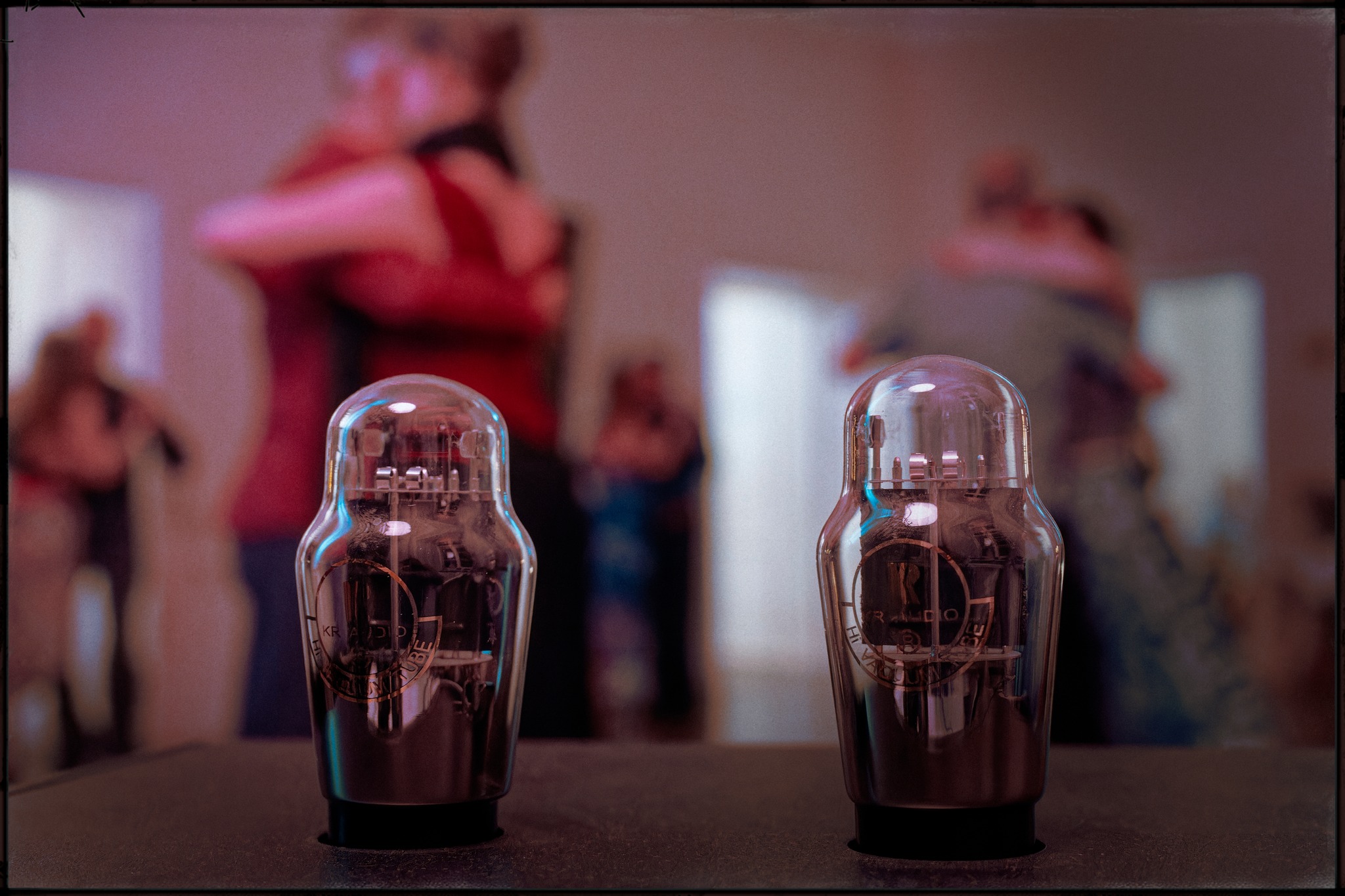
Meanwhile, part of today’s audiophile world seems to be rediscovering older technological philosophies again. Modern delta-sigma DACs dominate the consumer market because they are extremely precise, compact and efficient. Yet at the same time there has been a renewed fascination with so-called ladder DACs or R2R DACs, architectures inspired by earlier Philips converter designs based on discrete resistance networks.

For some listeners these converters are perceived as less analytical, more fluid or somehow more “musical”, even if measurements do not always support dramatic objective differences. Similarly, hybrid amplification chains using vacuum tubes in DAC output stages or preamplifiers have returned in certain audiophile circles, almost as an attempt to reintroduce a form of analogue imperfection back into an otherwise extremely controlled digital signal path.

This tension between precision and warmth already existed long before contemporary HighRes debates. In the 1980s vinyl itself underwent a similar technological evolution with the introduction of Direct Metal Mastering (DMM), where records were cut directly into copper rather than traditional lacquer discs. DMM promised cleaner transients, lower surface noise and greater precision, almost a kind of “high-definition vinyl”. Some listeners loved its clarity and control, while others perceived it as overly analytical or lacking the softer warmth associated with older lacquer cuts. In some ways DMM was not even entirely a futuristic rupture with the past. It also represented a partial return toward older industrial traditions already present during the shellac era, where metal master stages already played a central role in the manufacturing process.
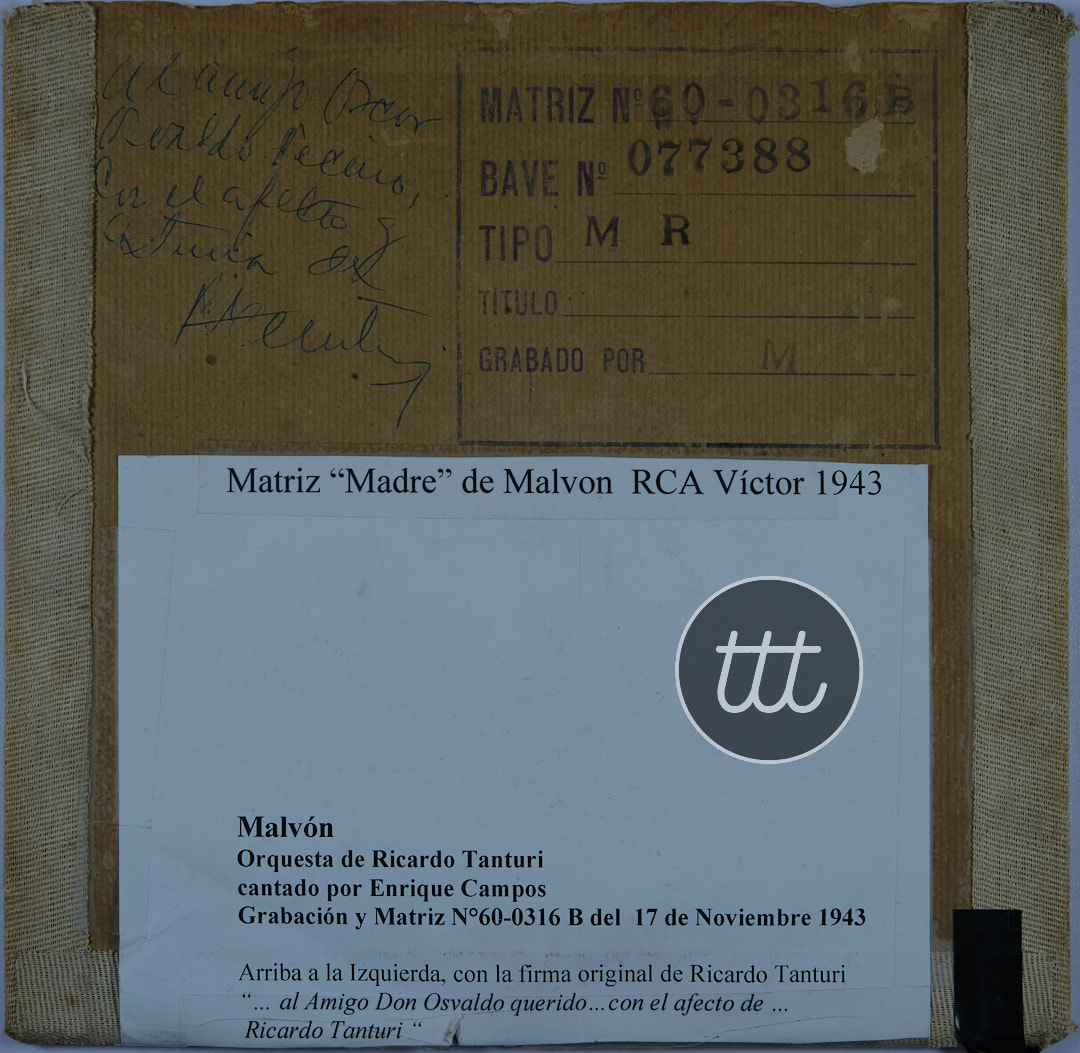
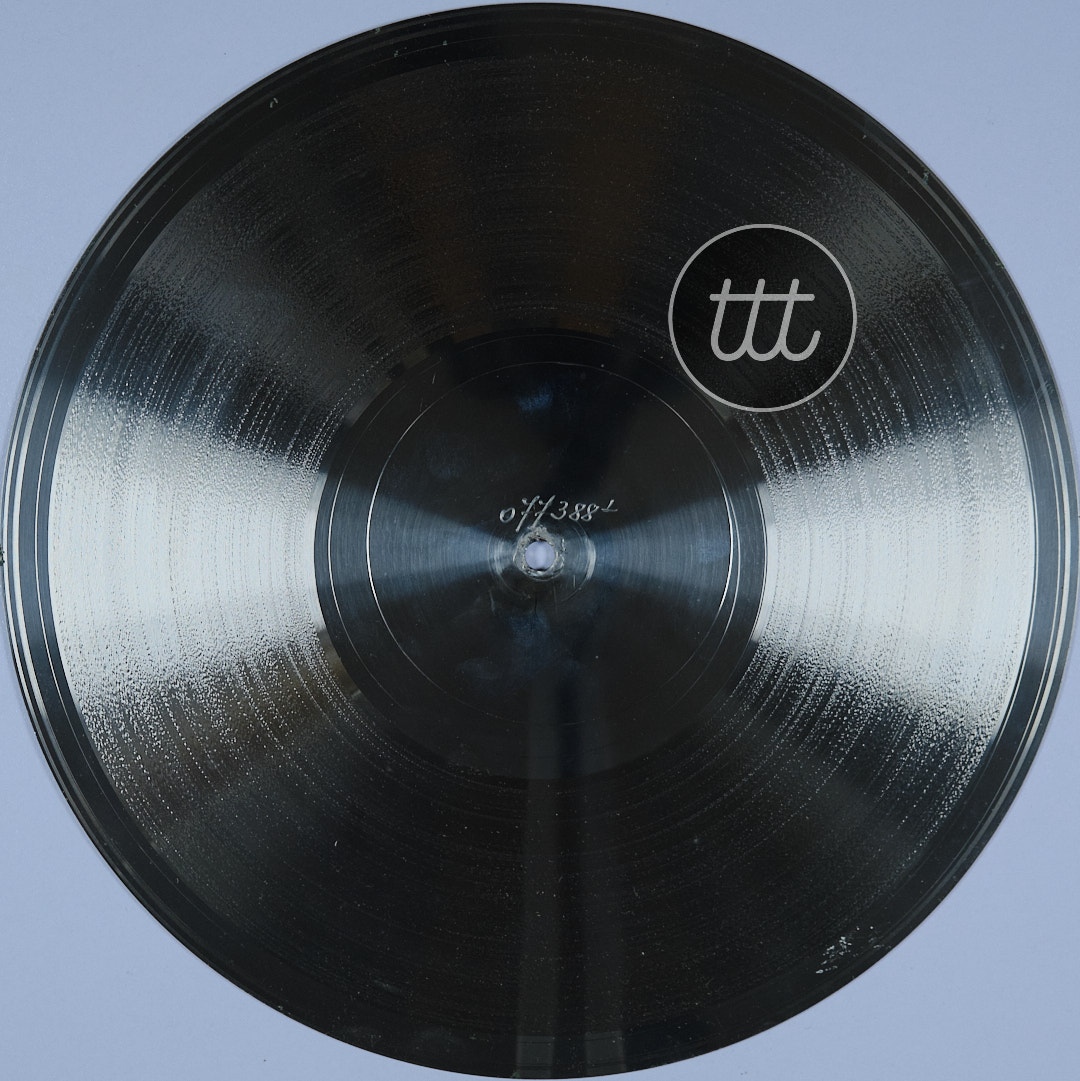
All this also reminds us that we should be careful when thinking about audio technology in purely linear terms, as if the future were automatically superior to the past simply because it is newer.

Technical progress is real, of course. Modern restoration tools, converters and digital workflows can achieve things unimaginable only a few decades ago. But listening itself is not a purely technical act. It is shaped by perception, memory, aesthetics, culture and emotion, and sometimes simply by whether a room suddenly feels alive or strangely absent.

Throughout the history of recorded sound, technologies initially celebrated as breakthroughs were sometimes later criticized for sounding too clinical, too controlled or too detached from the physical texture of music. At the same time, older technologies once abandoned as obsolete are periodically rediscovered and reinterpreted as more “musical”, “organic” or emotionally engaging.

Audio history therefore does not evolve along a simple straight line. It moves more like a pendulum between precision and imperfection, control and texture, analysis and emotion.

Tango listeners may intuitively understand this better than many others. We continue to dance recordings made under severe technical limitations, sometimes nearly a century ago. Yes, they often contain surface noise to varying degrees, depending on the condition of the transferred shellacs and the philosophy of the restoration itself. But many of these recordings also transmit something remarkably unique that modern productions often struggle to recreate.

Most tango recordings of the golden age were essentially direct-to-disc performances: orchestras playing live from beginning to end, musicians gathered physically in the same room, balancing themselves acoustically around a small number of microphones, often under enormous time pressure. In many cases, first takes were released commercially.

What these recordings may lack in technical perfection, they often compensate through immediacy, tension, collective interaction and an almost physical sense of presence. One does not merely hear the orchestra, one sometimes has the impression of witnessing a living moment being fixed onto material in real time. In a certain sense this recalls the famous “ça-a-été” described by Roland Barthes in his reflections on photography: the strange emotional awareness that what we perceive is not a simulation but the trace of something that truly existed in front of the recording apparatus at a specific moment in time.

Modern production frequently constructs performances layer by layer through editing, overdubbing and postproduction, while many golden-age tango recordings document irreversible collective decisions unfolding in real time.

This may also explain why so many historic tango recordings continue to move listeners so deeply despite their technical imperfections. Their fragility itself becomes part of the experience. The crackle remains, the shellac noise remains, yet somehow the orchestra still cuts through time.

Restoration as interpretation

A fascinating and sometimes disturbing aspect of tango restoration is that the very same historical recording can exist emotionally as several completely different recordings while technically still being “the same take”.

When listening to transfers produced during the 1960s, 70s and 80s, before contemporary digital restoration tools became available, one can already perceive very strong added artifacts and interpretative interventions. Artificial reverberation was frequently added to historic recordings to varying degrees of intensity, partly because dry shellac transfers were often perceived as too narrow or acoustically primitive for contemporary listeners.

The result was paradoxical. The orchestra suddenly appeared to inhabit a much larger space, and part of the surface noise became masked almost incidentally by the added ambience. Yet at the same time much of the recording’s immediacy, detail and physical presence disappeared. The musicians no longer seemed to play together inside a tangible room but instead inside an abstract acoustic cloud. Similar problems sometimes appeared later in artificially widened pseudo-stereo remasters where the orchestra lost part of the remarkable solidity and spatial coherence many original mono recordings still possess.
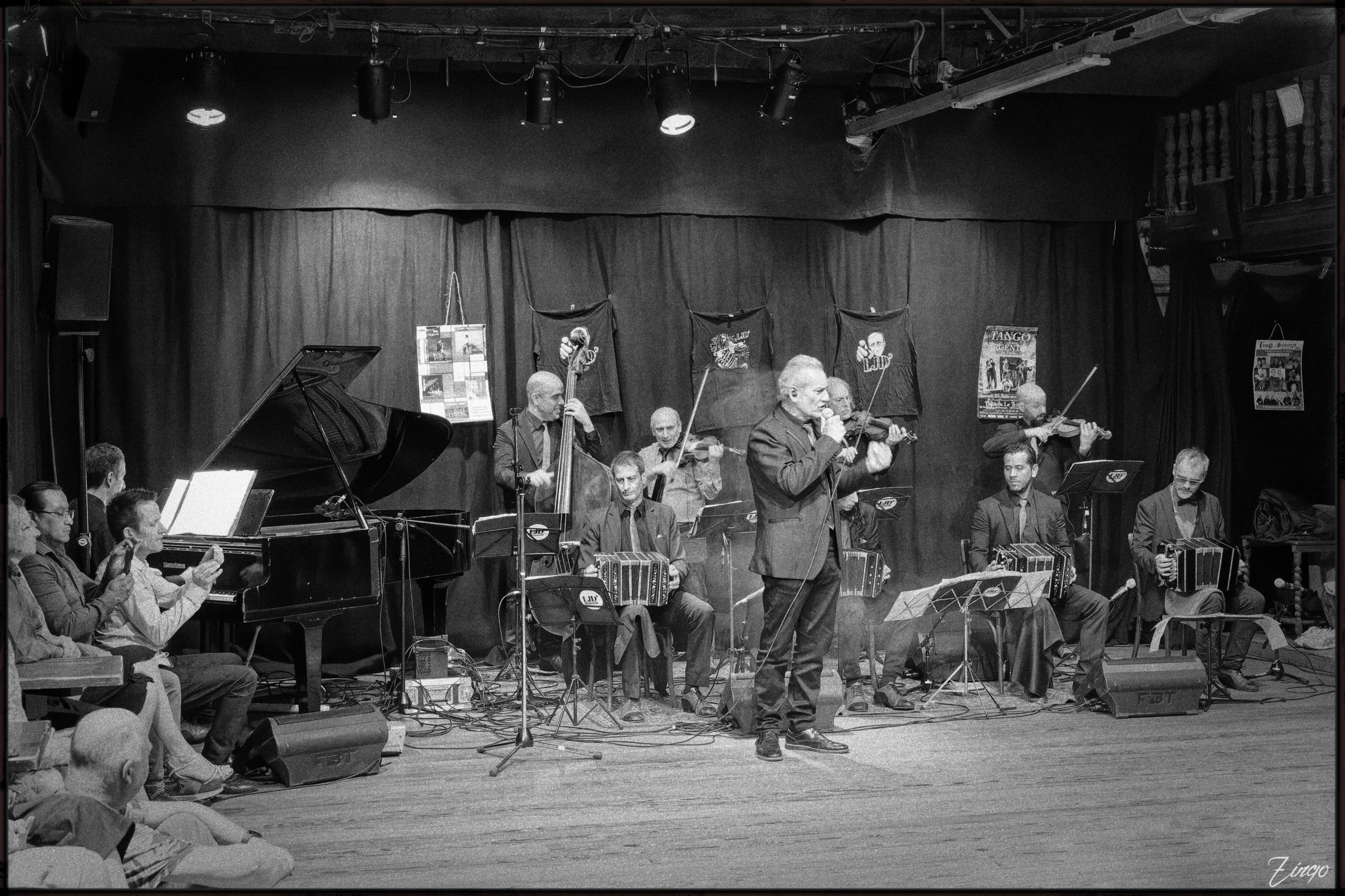
La Juan D’Arienzo live in Brussels

Strong pitch deviations were also frequently introduced during this period, sometimes intentionally, sometimes accidentally through transfer chain inaccuracies. Recordings became faster, brighter and superficially more energetic. But changing playback speed also changes tonal center, orchestral colour and emotional character.

The intention of the orchestra itself could therefore become subtly transformed. A darker, suspended Troilo passage could suddenly become nervous and hurried. Rhythmic gravity weakened, phrasing changed and the emotional architecture of the performance shifted almost imperceptibly toward restlessness.

Contemporary retransfer projects returning directly to original shellac discs can therefore feel genuinely revelatory. One does not merely recover cleaner sound. One often rediscovers the orchestra’s original temporal breathing, tonal balance and emotional weight, but also entire layers of orchestral detail that had remained buried or nearly inaudible for decades.

This is also why higher internal resolutions such as 96kHz/24bit can make considerable sense during restoration workflows themselves. Spectral repair, de-clicking, EQ processing, pitch correction and oversampling operations all benefit from additional processing headroom even if final playback distribution later returns to standard CD-quality formats.

Restoration is therefore never purely technical. It always also becomes an interpretation of musical presence across time. Sometimes a tiny EQ decision or a slight pitch correction can completely change the emotional gravity of a recording.

A practical listening experiment that tango DJs, and dancers as well, can easily perform is to focus not on overall loudness or apparent brilliance, but on instrumental separation inside the orchestra.

Can you clearly distinguish the double bass from the left hand of the piano? Can you follow the internal dialogue between bandoneóns and violins? Do the rhythmic accents remain intelligible when the full orchestra enters simultaneously? Do transients strike with physical immediacy, almost hitting the room, or do they feel softened and collapsed into themselves? Or does everything gradually dissolve into a kind of undifferentiated sound soup?

Differences in source quality often become perceptible precisely here, restoration philosophy and transcoding damage become much more perceptible than abstract discussions about sampling rates. Poorly preserved dynamics, excessive compression, aggressive denoising or repeated lossy transcoding tend to blur orchestral structure. Instrumental contours soften, transient attacks lose precision and the internal architecture of the arrangement becomes harder to perceive.

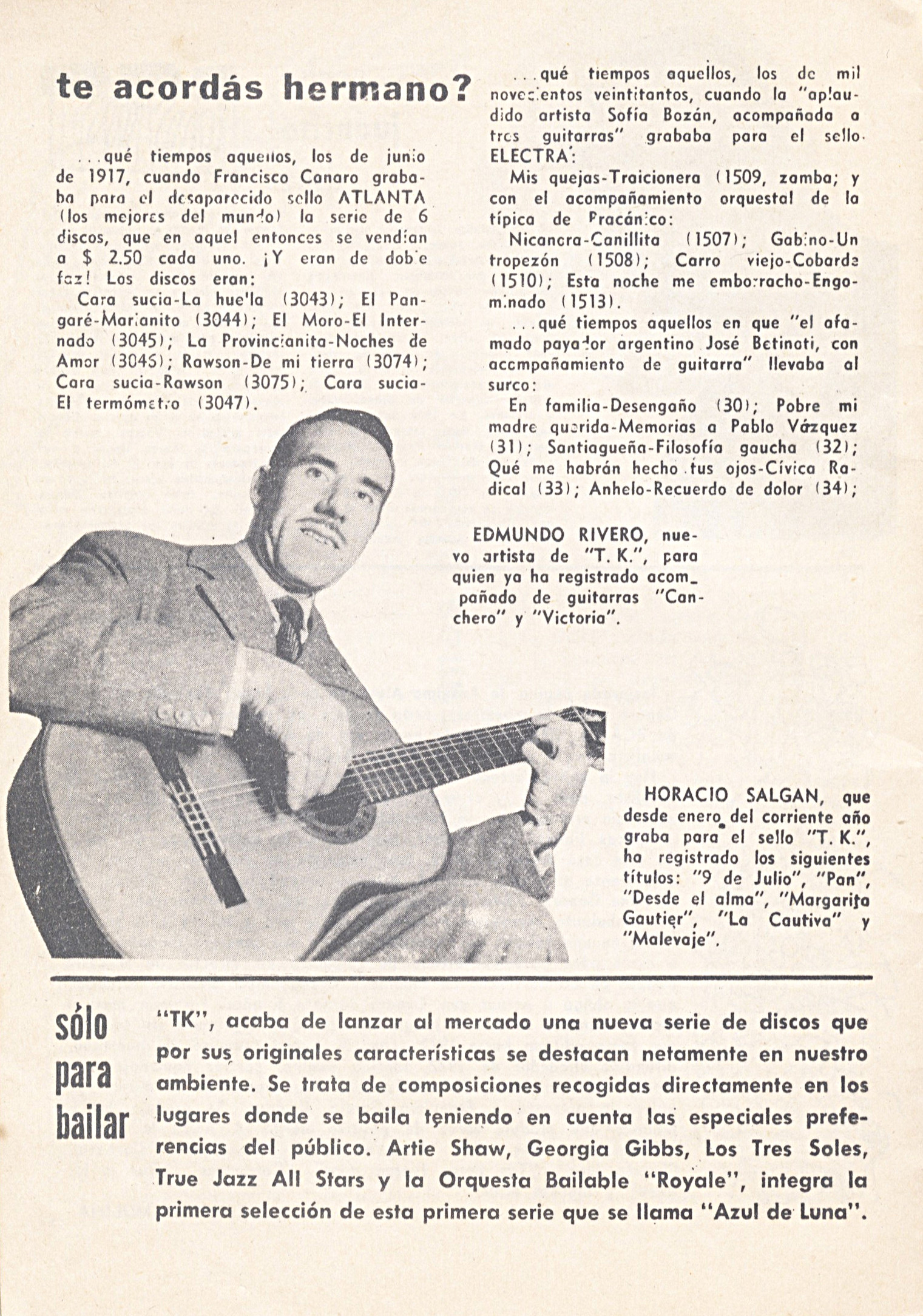
Yet tango orchestras were extraordinarily sophisticated constructions. Figures such as Aníbal Troilo, Osvaldo Pugliese and Horacio Salgán, together with the arrangers surrounding their orchestras, developed highly complex internal balances between rhythmic foundation, melodic phrasing and orchestral colour. Even dancers without technical audio knowledge often perceive these differences instinctively through the body itself. The walk becomes more grounded, pauses gain tension and the embrace seems to breathe more naturally with the orchestra when the internal structure of the music remains clear and alive.

A restoration does not exist only as an isolated audio object under laboratory conditions, but as part of a shared physical experience unfolding inside a room full of dancers.

In this context one should also be careful not to approach historic tango recordings with the idea that they somehow need to be transformed into modern digital productions. The objective of restoration is not to make a 1937 shellac sound like a contemporary studio recording, nor to eliminate every trace of background noise at any cost. Surface noise, hiss and material imperfections are inseparable from analogue recording history to varying degrees. Of course excessive noise can become distracting, and careful restoration work can significantly improve listenability. But an obsessive focus on noise removal can easily shift attention away from far more important musical questions, or even create entirely new problems inside otherwise excellent transfers.

Aggressive denoising often removes not only noise but also harmonic information, room texture, transient detail and part of the orchestra’s natural presence. Violins become strangely synthetic, bandoneóns lose their breath-like texture and the overall recording may begin to sound sterile or emotionally flattened.

Another important aspect often forgotten in online restoration debates is that many DJs and collectors today evaluate historic recordings through highly resolving headphones or nearfield studio monitors under extremely controlled listening conditions.

But a milonga is a completely different acoustic reality. Music in a tango event circulates through large PA systems, reflective rooms, moving bodies, conversations, wooden floors and constantly shifting collective acoustics. Under these conditions a considerable part of low-level hiss and broadband surface noise is often naturally masked or simply absorbed into the overall acoustic environment, while what remains perceptually important is usually not microscopic spectral cleanliness, but the orchestra’s rhythmic structure, harmonic richness, dynamic breathing and bodily energy.
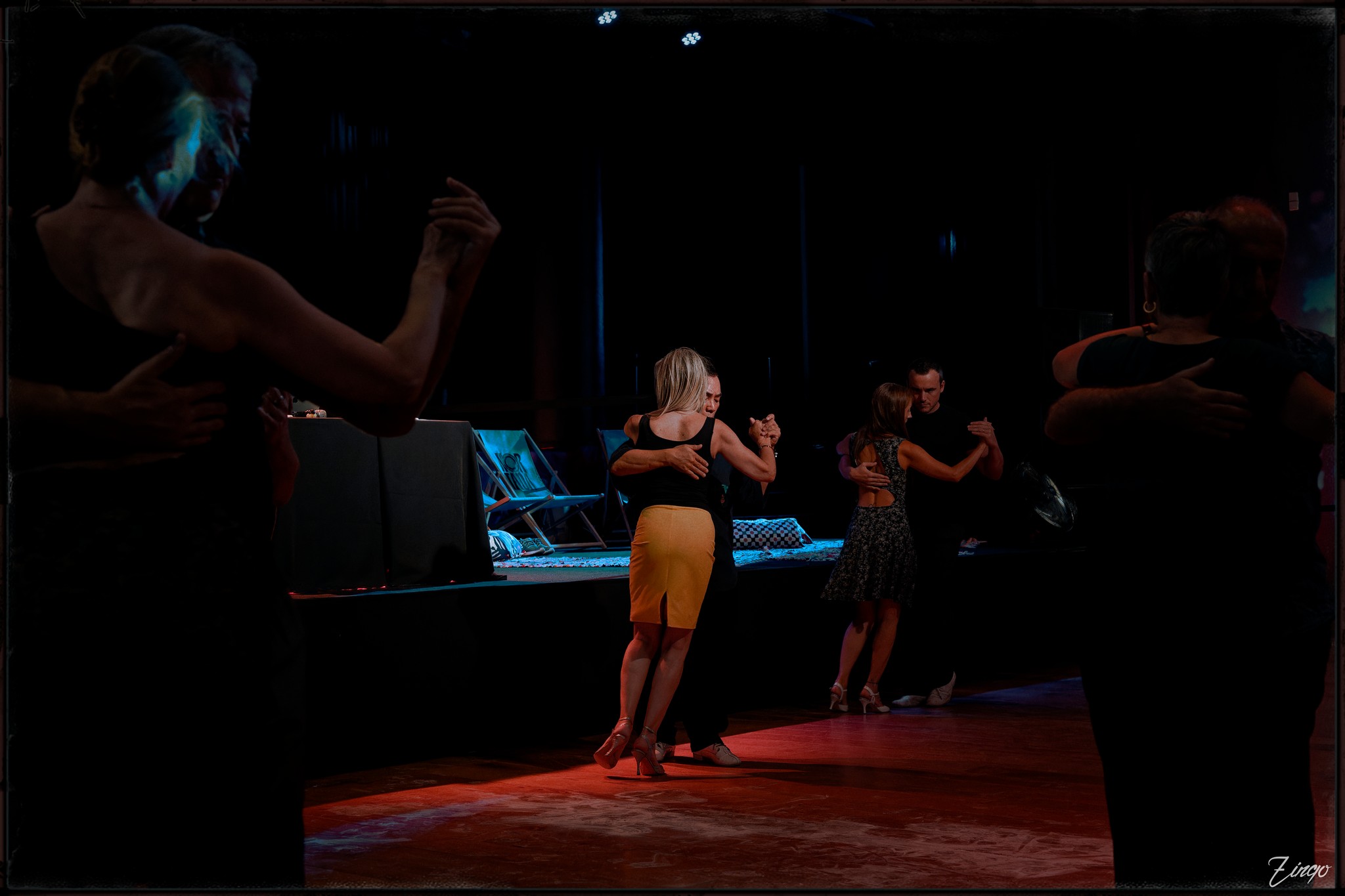
Certain aggressively denoised restorations therefore sound superficially “clean” in isolated headphone listening can paradoxically feel weaker, flatter or less alive during actual social dancing. Meanwhile a slightly noisier transfer preserving the orchestra’s internal texture and transient vitality may suddenly become extraordinarily convincing once projected through a real milonga sound system.

Tango listening is therefore deeply contextual.

A restoration does not exist only as an isolated audio object under laboratory conditions, but as part of a shared physical experience unfolding inside a room full of dancers. And dancers are often much better listeners than they themselves think. Tango sound quality is fundamentally relational rather than absolute. It emerges between orchestra, restoration, playback chain, room acoustics, dancers and collective perception rather than existing as an isolated technical property inside the recording itself.

MP3, streaming and musical circulation

For many tango DJs of the early internet era, MP3 was not initially an audiophile question at all. It was a revolution of circulation. Suddenly rare orchestras, forgotten singers and impossible-to-find recordings could travel internationally within minutes rather than years.

Entire generations of tango dancers discovered orchestras through forums, mailing lists, peer-to-peer exchanges and later Facebook groups long before streaming platforms began integrating historical tango catalogues.

MP3 therefore undeniably contributed to the democratization of tango culture, even if this often came at the expense of sonic quality.

The problem is not merely that MP3 is lossy. The more serious issue is cumulative transcoding. A recording compressed repeatedly across several generations gradually loses articulation, transient precision and internal orchestral structure. Bandoneóns become grainy, violins flatten out and rhythmic tension softens.

This becomes especially problematic on platforms such as YouTube, where audio is often already uploaded from compressed sources before being recompressed yet again into new streaming formats. In many cases the resulting signal effectively becomes “lossy on top of lossy”.

As a discovery tool YouTube remains extraordinary. It functions as a gigantic collective musical memory and preview platform. But for serious milonga playback it should generally remain precisely that: a preview medium rather than a definitive archival source.

This is also where projects such as tango-dj.at become particularly valuable. Their prelisten functionality allows DJs to identify orchestras, compare versions and explore repertoire while still orienting themselves afterward toward higher quality sources and restorations.

Streaming services introduce a different paradox. We have access to more tango music than ever before, yet often with less knowledge about provenance, transfer quality and restoration history. Most streaming platforms do not produce new archival tango transfers themselves. In the overwhelming majority of cases they simply license and redistribute already existing catalogues provided by labels, distributors or aggregators, often relying on older CD masters transferred decades ago under very different restoration philosophies.

As a result, the presence of a recording on a modern streaming platform should not automatically be interpreted as evidence of archival quality or historical accuracy. The real restoration work, retransfers from original shellacs, pitch correction, stylus selection, noise management and preservation of orchestral articulation, is still often carried out by independent restoration engineers, collectors and specialized historical projects rather than by the streaming platforms themselves.

There is also another reason why streaming platforms are generally not ideal for professional milonga playback, even when they offer local caching or offline modes.

A tango DJ environment is fundamentally different from casual home listening. During a milonga one needs stable, predictable and uninterrupted playback over many consecutive hours. Streaming applications, however, remain software ecosystems primarily designed around consumer convenience rather than long-form live performance reliability.
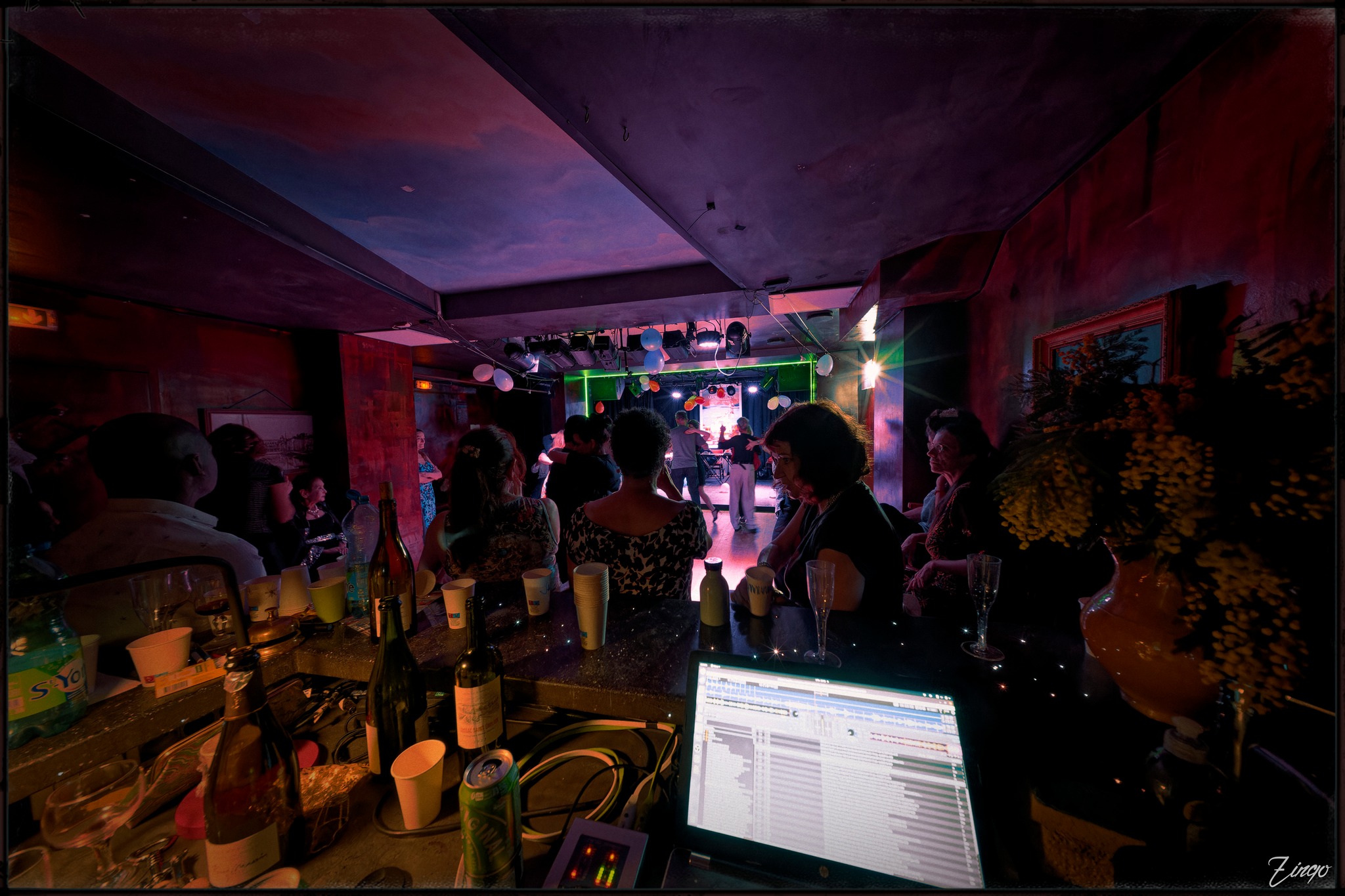
Background synchronization, DRM verification, sudden software updates, account logouts, network checks, metadata refreshes, playlist inconsistencies or buffering behaviour can all potentially introduce instability into a live DJ situation. Even small interruptions become highly visible in a tango environment because the entire room is collectively synchronized around the continuity of musical flow.

There is also the question of long-term control. Streaming catalogues constantly change according to licensing agreements. Recordings disappear, alternate masters silently replace older versions and metadata can change without warning. A DJ who carefully constructs tandas over years therefore usually prefers maintaining a locally curated and archived collection whose sonic characteristics remain stable and known.

For similar reasons, dedicated DJ software tends to function more reliably with locally stored audio files than with streaming integrations layered on top of additional decoding, authentication and synchronization systems. In practice, many experienced tango DJs therefore continue to prefer carefully organized local libraries in open formats such as AIFF, WAV or FLAC, even while using streaming platforms extensively for discovery, exploration and repertoire research.

Milongas are long. The body sometimes arrives at conclusions long before theory even understands the question.

Streaming platforms also normalize loudness aggressively. This creates another subtle but important transformation in musical perception.

Historic tango orchestras depend profoundly on dynamic breathing. Tension accumulates and releases. Rhythmic pressure alternates with suspension. Instrumental density expands and contracts continuously. Strong loudness normalization and dynamic range compression tend to flatten these movements into a permanently saturated present. Initially such masters may appear clearer, louder or more modern during short listening comparisons. Yet over extended periods they often become strangely exhausting.

The orchestra no longer breathes naturally. Musical events lose contrast. Silence itself becomes compressed. Dancers may unconsciously fatigue more rapidly because the music no longer provides sufficient dynamic relief or emotional suspension. This becomes particularly important in tango because milongas often last many consecutive hours. Sound quality is therefore not merely a question of isolated fidelity, but also of long-term bodily and emotional sustainability.

This may also explain why discussions around blind ABX testing and perceptibility sometimes become more complicated in real tango environments than they initially appear under laboratory conditions. Short analytical listening tests may correctly demonstrate that many listeners struggle to distinguish between formats under tightly controlled comparison situations. Yet social dancing unfolds across radically different temporal and embodied scales.
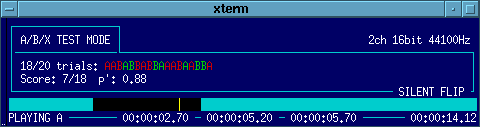
ABX audio test tool SquishyBall

A milonga is not a thirty-second headphone test between isolated audio fragments. It is an extended immersion involving movement, tension, fatigue, breathing, emotional accumulation and bodily synchronization over many consecutive hours. Under these conditions, subtle differences in dynamics, articulation, compression behaviour or listening fatigue may become perceptible less as consciously identifiable “sound differences” than as gradual shifts in energy, concentration, emotional openness and the way dancers inhabit the music itself.
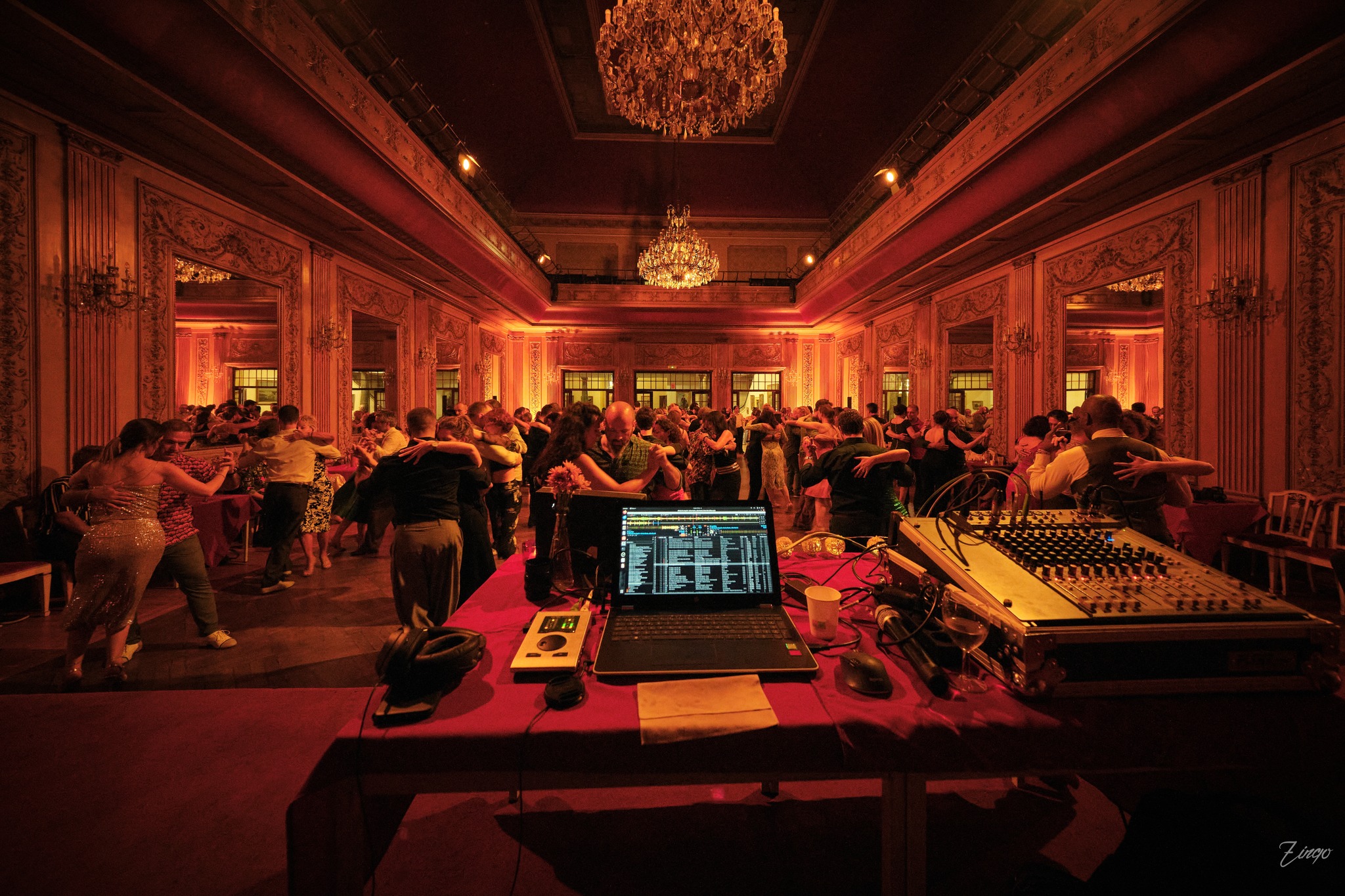
Certain historic transfers may initially sound less spectacular during quick comparisons while remaining considerably more pleasant, intelligible and emotionally alive across an entire night of dancing. Milongas are long. The body sometimes arrives at conclusions long before theory even understands the question.

Formats in practice

From a purely practical point of view, standard CD-quality audio, 44.1kHz/16bit, still remains one of the most sensible compromises for tango DJ playback. Properly mastered, it already captures essentially the complete audible spectrum while remaining computationally efficient, stable and universally compatible. Christopher Montgomery from Xiph.org formulated this pragmatic engineering position particularly clearly in his well-known reflections on digital sampling theory.
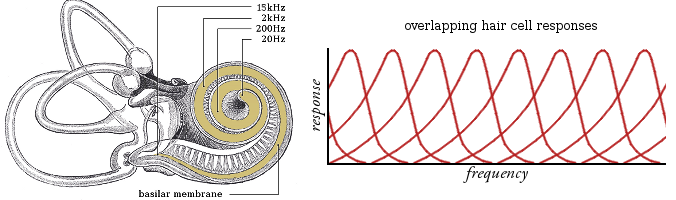
Once one understands how strongly tango depends on temporal coherence, articulation and collective rhythmic perception, the practical stability of the digital playback chain suddenly becomes far more important than abstract specification races.

Before dreaming too much about eventual benefits of HighRes audio and ultrasonic sound reproduction, it is perhaps worth taking a step back and looking concretely at the actual playback chain a contemporary laptop tango DJ must control in order to maintain a stable and coherent digital bitstream throughout an entire night of tandas.

We have already discussed some of the shortcomings and material fragilities of analogue sound reproduction. But digital audio has its own problems as well, even if they are often less immediately visible.

Timing errors, jitter, dropped samples, unstable USB communication, overloaded CPU scheduling, badly optimized drivers or aggressive power-saving mechanisms can all potentially affect playback stability. Unlike occasional shellac surface noise, these problems may not even manifest themselves continuously or dramatically. They often appear only under specific real-time conditions: a crowded milonga, large music libraries, external DACs, waveform analysis, Bluetooth interference, projector outputs, Wi-Fi synchronization or multiple background applications competing simultaneously for system resources.

What makes such problems particularly insidious is that listeners often perceive them less as clearly identifiable defects than as a vague sensation that something in the music no longer feels entirely stable, grounded or emotionally convincing. Rhythmic articulation becomes subtly nervous, orchestral separation weakens, transients lose precision and long listening sessions become strangely tiring without the listener necessarily understanding why.

In tango this can matter enormously because the music depends heavily on temporal tension, suspension and collective rhythmic coherence. Even small instabilities inside the digital playback chain may subtly affect how dancers physically synchronize themselves with the orchestra and with each other.

The fragility of digital playback environments sometimes reveals itself in unexpectedly comic ways. Years ago at a local milonga, during a Canaro tanda, a DJ suddenly received an incoming Skype call directly through the sound system. For a few surreal seconds the room genuinely seemed to wonder whether Canaro himself was perhaps calling in from the au-delà.

At another international event, a DJ had apparently forgotten to renew his VirtualDJ licence. Every thirty minutes the software would abruptly interrupt the atmosphere by loudly announcing the words “Virtual DJ!” through the PA system like some strangely enthusiastic digital parrot periodically emerging from inside the tanda.

Beyond the humor, such moments also remind us how many invisible technological layers contemporary laptop DJs continuously depend upon. Operating-system notifications, messaging applications, wireless synchronization, licensing systems, background updates and competing audio processes all potentially interfere with the continuity of musical flow if not carefully controlled.
A particularly interesting example is the open-source DJ software developed by the Mixxx community. Beyond supporting Linux, Mixxx also runs on Windows and macOS, even though these systems do not traditionally rely on realtime kernels in the same way. Mixxx is especially interesting because it exposes technical playback information such as dropped audio buffers while taking advantage of realtime processing and optimized I/O priorities when available.

In my own experience, one reason the DJ software Mixxx works particularly well is precisely because it follows a radically different philosophy. As free and open-source software, Mixxx avoids many of these external dependencies while handling operating-system sounds, alerts and intrusive background interruptions particularly effectively. Combined with stable realtime-oriented audio workflows, this can make an enormous difference during long milonga situations where reliability itself becomes part of the listening experience.

My own preference would generally go toward operating systems capable of offering at least partially preemptive or realtime-oriented kernel behaviour, as found in many Linux distributions. Combined with playback software designed with realtime audio priorities in mind, this can significantly reduce timing instability and improve overall playback robustness.

And one should perhaps not underestimate another important aspect of open-source software in this context: long-term autonomy. If a proprietary platform disappears, changes licensing conditions or suddenly withdraws access, DJs may find themselves locked out of tools or workflows they depended upon for years. Open-source software cannot entirely eliminate technological fragility, but it considerably reduces dependency on external corporate decisions. In the long run this also becomes a form of sustainability, continuity and freedom from lock-in.

Of course software is only part of the equation. A decent DAC, stable USB communication and properly constructed audio cabling remain equally important. Fortunately, the general quality threshold of affordable DACs has improved enormously during the last years. One no longer needs astronomically priced audiophile hardware in order to achieve remarkably transparent playback. Older DACs designed during earlier generations of consumer digital audio can sometimes still benefit from replacement. Improvements in clock stability, converter design, noise isolation and USB implementation have become quite substantial even in relatively modest price ranges.

Good overall discussion and ranking of current DAC models

As always, however, the goal should not be technological fetishism for its own sake. Beyond a certain threshold one often buys not only marginal sonic refinement, but also build quality, electrical stability, robustness and long-term reliability. And in a tango DJ context, reliability itself is already an essential part of sound quality.

Another practical aspect often underestimated by newer DJs is format consistency within the music library itself.

Many modern DJ applications internally convert or buffer audio into a unified playback pipeline in real time. When constantly switching between very different formats, MP3, FLAC, AIFF, AAC, streaming codecs or externally synchronized cloud files, the software may need to perform additional decoding, transcoding, waveform generation or cache management operations during playback. On powerful modern machines this is usually manageable, but in long milonga situations involving large libraries, continuous searching, external sound cards, Bluetooth interference, projector outputs or multiple background processes, unnecessary format complexity can still become a source of instability.

For this reason many experienced DJs prefer keeping their primary playback libraries relatively homogeneous and predictable. Beyond sound quality itself, consistency reduces CPU overhead, simplifies waveform caching and generally leads to more stable long-duration playback behaviour.

Simple, well-supported formats such as AIFF, WAV or FLAC at standard CD-quality resolutions often remain the most pragmatic solution for tango DJing. High bitrate MP3 can still perform surprisingly well in many real-world milonga situations, especially when encoded carefully from good source material. The real problem usually begins less with MP3 itself than with repeated transcoding, poor source provenance and cumulative compression artifacts gradually eroding orchestral articulation and dynamic coherence.

There is also a certain irony in contemporary audio culture. Some listeners debate minute differences between extremely high-resolution audio formats while simultaneously transmitting the final signal through heavily compressed Bluetooth codecs. None of this makes Bluetooth unusable, modern codecs improved enormously, but it once again reminds us that isolated technical specifications rarely determine musical experience by themselves. Audio reproduction always functions as an entire chain whose weakest elements often become more significant than theoretical maximum resolutions elsewhere in the system.

An aspect often overlooked in format discussions is long-term archival stability itself. Tango DJs do not merely consume music temporarily, they gradually construct personal archives over decades. A DJ collection is often less comparable to a playlist than to a constantly evolving musical memory system in which recordings, metadata, tanda logic, historical associations and personal listening experience slowly accumulate into a form of cultural memory.

In this context open and well-documented formats become important not only for sound quality but also for long-term independence. Proprietary ecosystems, DRM restrictions, cloud dependencies or closed streaming infrastructures may function comfortably in the short term while remaining fragile over longer historical timescales.

This is partly why real open-source formats such as FLAC became so important in archival communities. The objective is not only efficient lossless compression, but the possibility of preserving musical material independently from specific vendors, subscriptions or platforms.

Ironically, tango culture itself already understands the fragility of disappearing media extremely well. Entire orchestras survived only through private collectors, forgotten shellacs or accidental archival preservation.

Metadata may appear secondary compared to audio quality itself, yet for tango DJs it becomes absolutely fundamental because tango recordings rarely function as isolated tracks. A tanda is not a random playlist assembled by algorithmic coincidence. They exist inside networks of orchestras, singers, recording dates, stylistic periods and emotional relationships that continuously influence musical interpretation and tanda construction.

Metadata on non-specialized platforms can also be incomplete, inconsistent or entirely absent. Missing or incorrect recording dates, for instance, may seem harmless at first glance while profoundly affecting historical coherence during tanda construction. A DJ unknowingly mixing recordings from radically different orchestral periods may unintentionally destroy stylistic continuity, tonal evolution or rhythmic consistency inside the tanda itself.
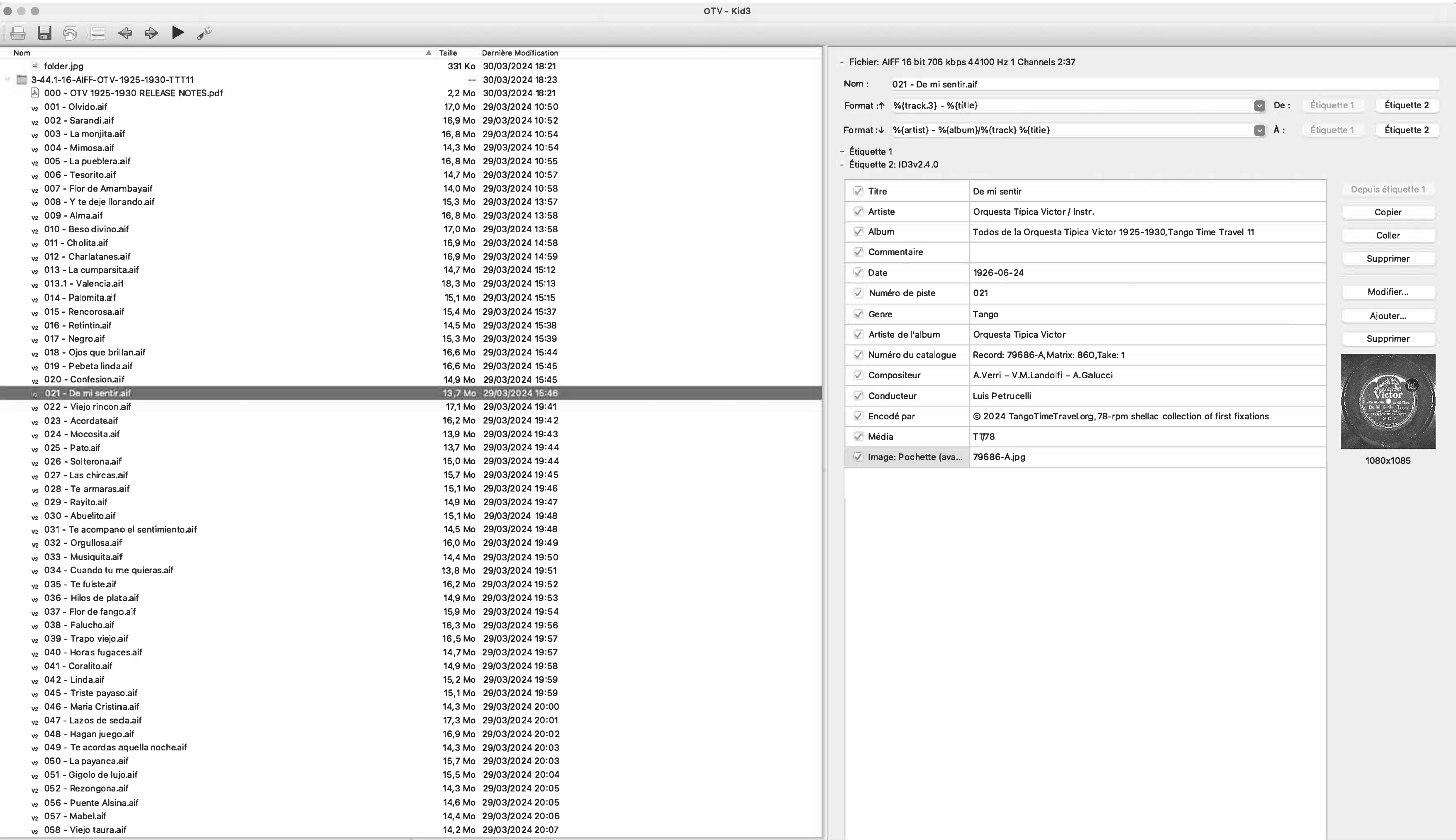
Tango Time Travel’s metadata scheme

A tango recording is never merely a sound file. It carries a network of relationships: orchestra, singer, recording date, composer, lyricist, genre, historical period, recording label and countless subtle contextual associations influencing tanda construction. Poor metadata transforms musical archives into chaos. Good metadata, by contrast, allows orchestras and historical periods to remain intelligible across time.

Digital tango culture is therefore not only preserving sound, but also preserving musical memory structures.

The human ear, and perhaps even more the human mind, may ultimately remain one of the most sophisticated noise-reduction systems ever developed

Ultimately, this may be what tango DJs and listeners are really searching for when discussing formats, restorations and playback quality. Not technological perfection for its own sake, but the sensation that somewhere beneath the shellac noise, compression artifacts, imperfect transfers and changing playback systems, an orchestra briefly becomes present again in the room with us.

Tango recordings are traces of human presence surviving through fragile technological media. They carry bodies, gestures, tensions, breaths, hesitations and emotional architectures across enormous distances of time.

And this may also explain why certain old recordings continue to move dancers so deeply despite all their technical imperfections. Beyond the specifications, beyond the formats and beyond the endless debates about audio purity, one still perceives something fundamentally human attempting to survive inside the recording itself.
Each format therefore ultimately finds its own pragmatic place. HighRes workflows make enormous sense during restoration, mastering and archival preservation where additional processing headroom matters. Standard CD-quality audio remains one of the most sensible and stable compromises for actual tango DJ playback, combining excellent audible fidelity with reliability and broad compatibility. High bitrate MP3 still remains perfectly usable for circulation and portability when unnecessary transcoding is avoided carefully. Streaming platforms and YouTube, finally, function extraordinarily well for discovery and exploration, but much less reliably as long-term archival or professional milonga playback environments.

But none of these distinctions are ultimately the deepest point.

The aim is the immersive collective experience itself: diving together into the strange temporal space of the golden age, feeling orchestras breathe again through the room, perceiving tensions, articulations and suspended emotions reappear physically between dancers.

This may also explain why listeners often tolerate a certain degree of shellac noise or analogue imperfection much more naturally than laboratory-style listening tests would suggest. The human ear, and perhaps even more the human mind, may ultimately remain one of the most sophisticated noise-reduction systems ever developed. Once emotionally engaged, we instinctively focus on phrasing, tension, orchestral breathing and musical intention while gradually pushing part of the surface noise into the perceptual background.

It took me years to really dance the music, and I am still working on it. A carefully restored and coherent transfer combined with a well-constructed tanda flow presented at a milonga can become extraordinarily satisfying to dance to. It can deeply support the musicality of the dancers themselves and stimulate their creativity inside the embrace.

A tango DJ therefore gradually learns not to rely only on specifications, waveforms or technical discourse. My own advice would therefore be to trust your ears and your feelings first, and let technical specifications serve them rather than replace them. Formats, waveforms and measurements matter, of course, but ultimately they remain vehicles through which orchestras, emotions and human presence attempt to travel across time.

The grounding of the walk, the elasticity of the embrace, the breathing of the room itself and those rare moments where an orchestra suddenly seems alive again despite all historical distance often become far more meaningful indicators.

Tango sound quality is fundamentally relational rather than absolute. It emerges between orchestra, restoration, playback chain, room acoustics, dancers and collective perception.

Or perhaps more simply: between human beings listening together in time.
Tanguango with Aníbal Troilo, the short story of the record label Discos T. K.

“We know, and we cannot explain the cause, that many típicas have recorded up to five versions onto wax, and despite the time elapsed these works have not been released, nor have they gone on sale. And on the other hand, interpreters who were not part of our middle recorded yesterday, and only a few hours after the printing, their records circulate.”

Julio Jorge Nelson, songwriter and tango critic,

Buenos Aires Oct 1951


A new record company is born

The famous Argentine actor Pepe Iglesias recording his first record with the new label T.K. in 1951

In the beginning of the 1950s something very interesting happened to the Argentine music market which had an important influence on the subsistence of the tango genre. A lot of new record labels were founded multiplying the chances for the tango bands to get a recording contract. To quote just a few: Orfeo (Caló, Firpo, …), Columbia (Fresedo, Pirincho, Charlo), Pathé (Attadia, Pedernera, Del Piano), Pampa (Varela, Barbero, Donato, …), Antar-Telefunken (1957 Uruguay), etc.

This occurred at a moment when more and more foreign music got pushed onto the Argentine music market. It is the post war time and the culturally isolating bubble of the tango golden age had definitively come to an end. The music market evolved more and more into a global business where the record labels would sign international agreements for catalog sharing and representing each other in their respective countries. The recordings had become more transportable since the technology was shifting away from the former shellac process, which was heavier, less flexible and slower in production, to the new vinyl technology. This opening of the music market represented a chance and a danger at the same time. On the one hand, the sudden availability of global markets and the diversification of national record labels was an opportunity to be sized by the numerous tango musicians, maybe also to get exported and on the other hand, the local market was submerged by foreign music shifting away the public interest from the music of the típicas.

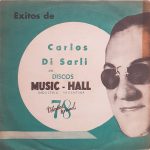
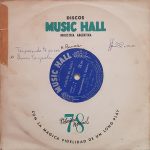
One of the new labels founded in Buenos Aires was Music-Hall, my last article was discussing this label in depth, the present article will focus on the other tango related independent record company called Discos T.K.

While Music-Hall intensively and right from the beginning was working with the new vinyl technology, the TK label which started issuing at around the same time at the beginning of 1951, decided to work with the older shellac process. As discussed in my last article, Music-Hall, the other competing record label, had problems being an early adopter of vinyl because nearly nobody had yet a vinyl record player! TK certainly had better compatibility but their main problem was bad sound! And indeed, while listening through the original TK shellac records I sadly confirm that the quality of their first recordings is deficient, whereas, and that’s important to remind, the recording quality of Music-Hall was extremely high during their whole production history! As we will see, TK went through some kind of learning process which finally would improve their sound but for the Aníbal Troilo series which I will discuss here, it improved indeed but it never became perfect.

Often these two new labels are quoted or discussed as to be a single entity by error! People easily mix them up. But they were actually two completely separated commercial companies and competitors! The confusion might come from the fact that in the mid-1960s TK’s catalog was merged into Music-Hall.


Inter-Bas, the company behind TK

Music-Hall was owned by the company Sicamericana S.R.L. (Sociedad de Responsabilidad Limitada) and Discos T.K. was owned by Inter-Bas S.A. (Sociedad Anónima or Sociedad por Acciones). This is a form of company where originally, shareholders could be literally anonymous and collect dividends by surrendering coupons attached to their share certificates.

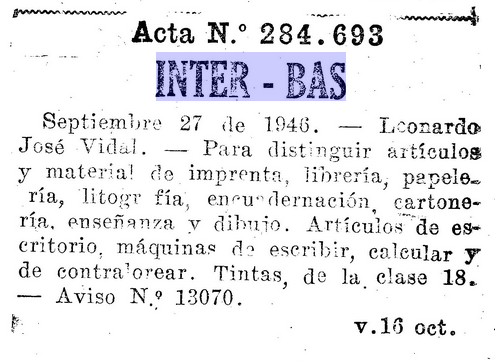
The founding act of Inter-Bas S.A. dates back to 27.9.1946 and in the beginning it was described as a stationary business dealing with office supplies, print media and typewriters. The brand name was registered by a certain Leonardo José Vidal.

In December 1950, Inter-Bas takes over a company which is specialised in selling equipment for learning English at home. During this act the name of another associate is mentioned: Eduardo Botta.
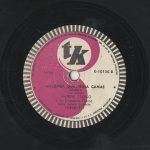
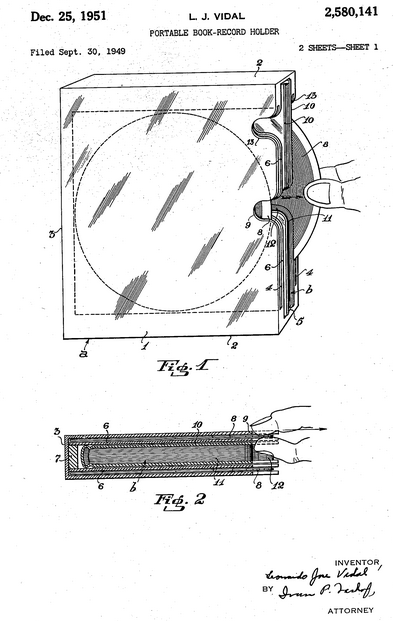
And in 1951 Leonardo José Vidal files a patent for a portable book record holder and is mentioned as the General Director of Inter-Bas S.A.

Processing just this information, it looks like besides entering into the music business, the company was interested in developing a multimedia device for audio language courses. We later will see that the invention of this patented device is actually key in understanding the brand name T.K.!


What does TK mean and stand for?

En su discoteca… Discos TK / Inter-Bas Cientifica, Industrial & Comercial S.A. / BUENOS AIRES ARGENTINA / INDUSTRIA ARGENTINA

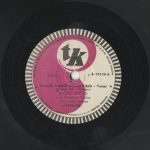
The name TK is literally explained on the record jackets. In 1951 records didn’t have yet sophisticated covers, shellac records used to be wrapped into kraft paper which often contained a form of simple printing. On the TK series there are outline drawings of instruments with some geometric shapes crossing the jacket. The other crossing line is the Spanish sentence “En su discoteca … discos tk” ending in the logotype of TK. From this we can derive one meaning of the letter combination TK: It is the homophone of the Spanish word teca and together with the word discos, discos TK, simply means discoteca. This word has three meanings: 1. a record library, 2. a device or furniture to store records and 3. a public dancing club. In some online forums there are contributions which speculate that TK might stand for Troilo-Kaplún. During my research I couldn’t find any evidence for that or that Aníbal Troilo or Raúl Kaplún were commercially involved in the record company other than having signed a recording contract with it.

Inter-Bas ad from 1951 for their publication of audiobooks (El libro sonoro)

The second meaning of the word discoteca, a device or furniture to store records, matches actually the patent which the director of Inter-Bas S.A. Leonardo José Vidal filed internationally! (see above) I can easily imagine that he came up with the name Disco TK, discoteca, to have an interesting name for his new practical storage device being at the same time a furniture and a collection device for records (disco) and books (biblioteca), compound and with an added neologism it results in name Disco T.K. And indeed, Inter-Bas had been a pioneer in the field of audiobooks, a chapter in their company history which seems to be forgotten and this perfectly fits the brand name Disco T.K. The advertisement for their audiobooks, to the left, published in 1951 is still under the company name of Inter-Bas without the new strong double articulated brand name which reflects the concept of publishing spoken books!


The first published tango records

First bunch of issued TK records, Boletin Oficial 1951

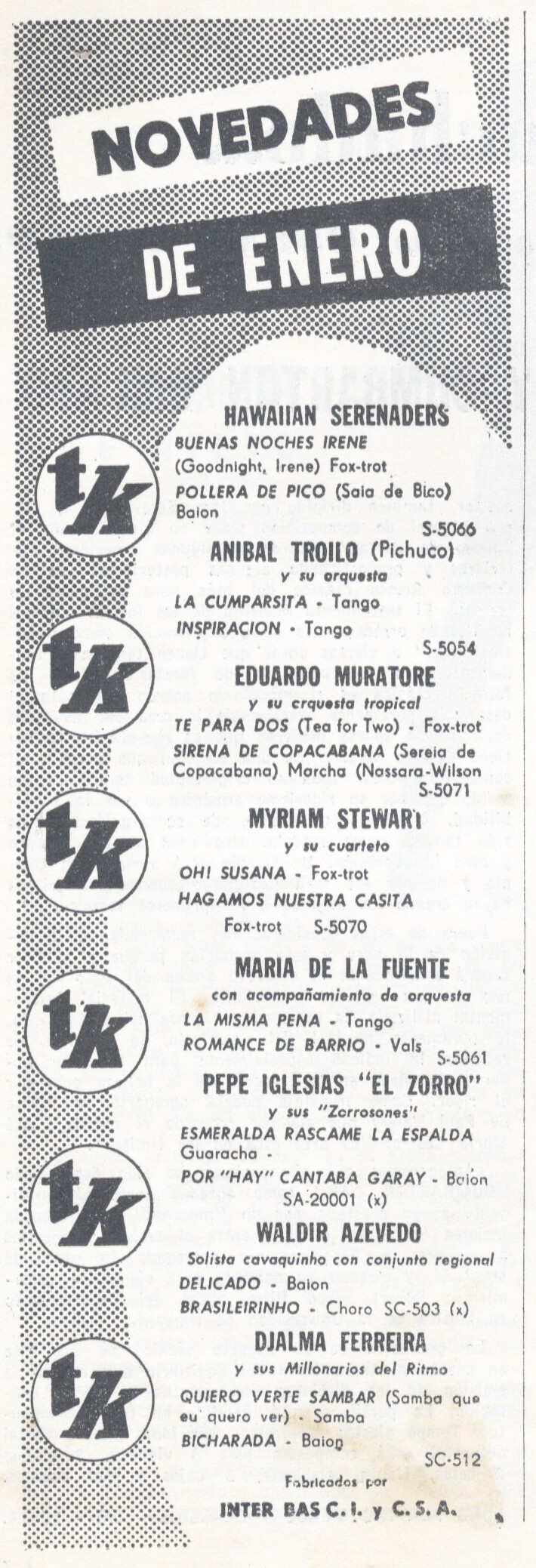
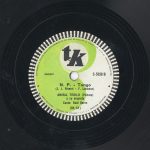
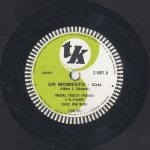
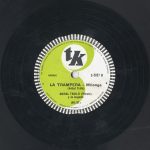
TK started off the record production with very well known musicians when they published their first bunch of records in 1951. Among the first signed artists were the tango diva Mercedes Simone, the soloist Agustín Irusta, the Orquesta Hawaiian Serenaders, the Orquesta Astor Piazzolla, and others. Later TK added more artists to their catalog like Horacio Salgán, Tito Martin, Joaquin Do Reyes to quote just a few. With Raúl Kaplún TK recorded only 4 records in total! With Aníbal Troilo they produced a total of 49 shellac records. Normally on a shellac record there are two tracks which should add up to an even total but with the TK-Troilo recordings there strangely is only an impair grand total of 97 tracks. This is because they have added the same recording of the milonga La trampera on two different records. Once on the record TK-S-5038 together with the tango N.P. and another time on the record TK-S-5057 alongside with the vals Un momento. On both records the matrix number of La trampera is 84/51. The faithful Troilo fan must have felt cheated when discovering that it’s the same track bought twice!

TK sold La trampera twice, once on the record S-5038 with N.P. and then a second time some months later on the record S-5057 with the vals Un momento. Both versions of La trampera are the same and they do have the same matrix number!


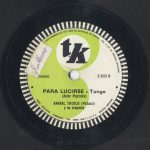
The first troilo TK record, Che Bandoneón – Para lucirse

Unlike Music-Hall, TK had an incredibly rich output already during its beginning phase. They were issuing new records nearly at the same pace as the big players Odeon and RCA Victor!

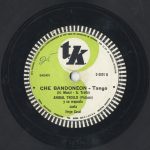
It’s in March 1951 that the first Troilo TK record was issued to the public. It had the number Disco T.K. S-5001. (As a side note: It’s the first record number of TK but not the first matrix number) On the A side Che Bandoneón and on the B side Para Lucirse interpreted by Aníbal Troilo and his orchestra. This record is very programmatic as the A-side is composed by Troilo himself and on the other side contains a tango by Astor Piazzolla who was since the end of the RCA Victor contract introduced as one of the new arrangers of the band as mentioned in the official Troilo discography. The Piazzolla arrangements and repertoire gave the TK recordings a very avantgarde and recital touch. Some of these tangos can also live outside of a pure dance music context and have an incredible listening factor!
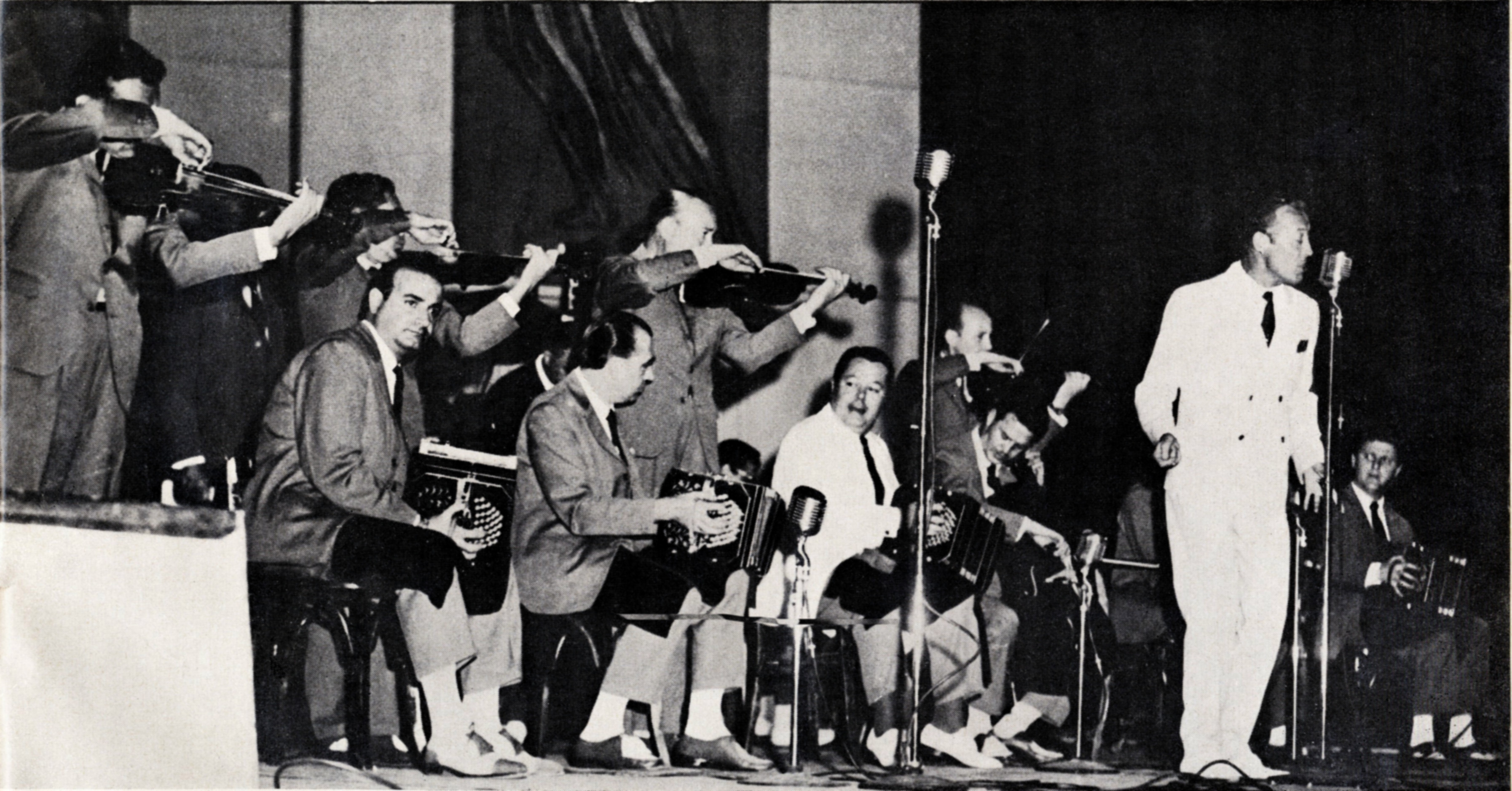
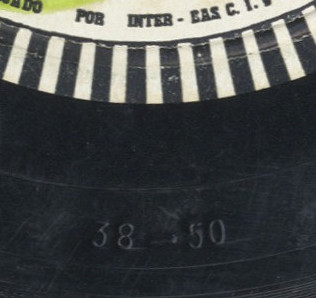
A nice move of TK was that they have put the recording year on the records, not many other record companies did this. In my opinion, the others mainly didn’t mention any dates on records because they wanted to keep the records fresh to the customer. This TK feature helps greatly to organise the records according to their recording year and to disambiguate. On this first record, the recording year is punched into the lead-out groove, check the enlarged picture to the left. Later they would add it on the record label, next to the matrix number.

As you might have recognised, the graphics on the T.K. record labels was a slightly derived Yin and Yang design, green and white in the beginning of the Troilo series, then for the 12 Troilo-Grela recordings it was black and white and later, for the last recordings it was red and white. This design of divine connotation gives them a touch of far-eastern wisdom and mystery. The outer ring has been printed interestingly with a black and white stroboscopic ring. When illuminated by incandescent or florescent lighting while the record spins on a turntable, the strobe lines will stand still at the appropriate configured speed! It is very possible that the record label transmitted that way the recommended playback speed information.

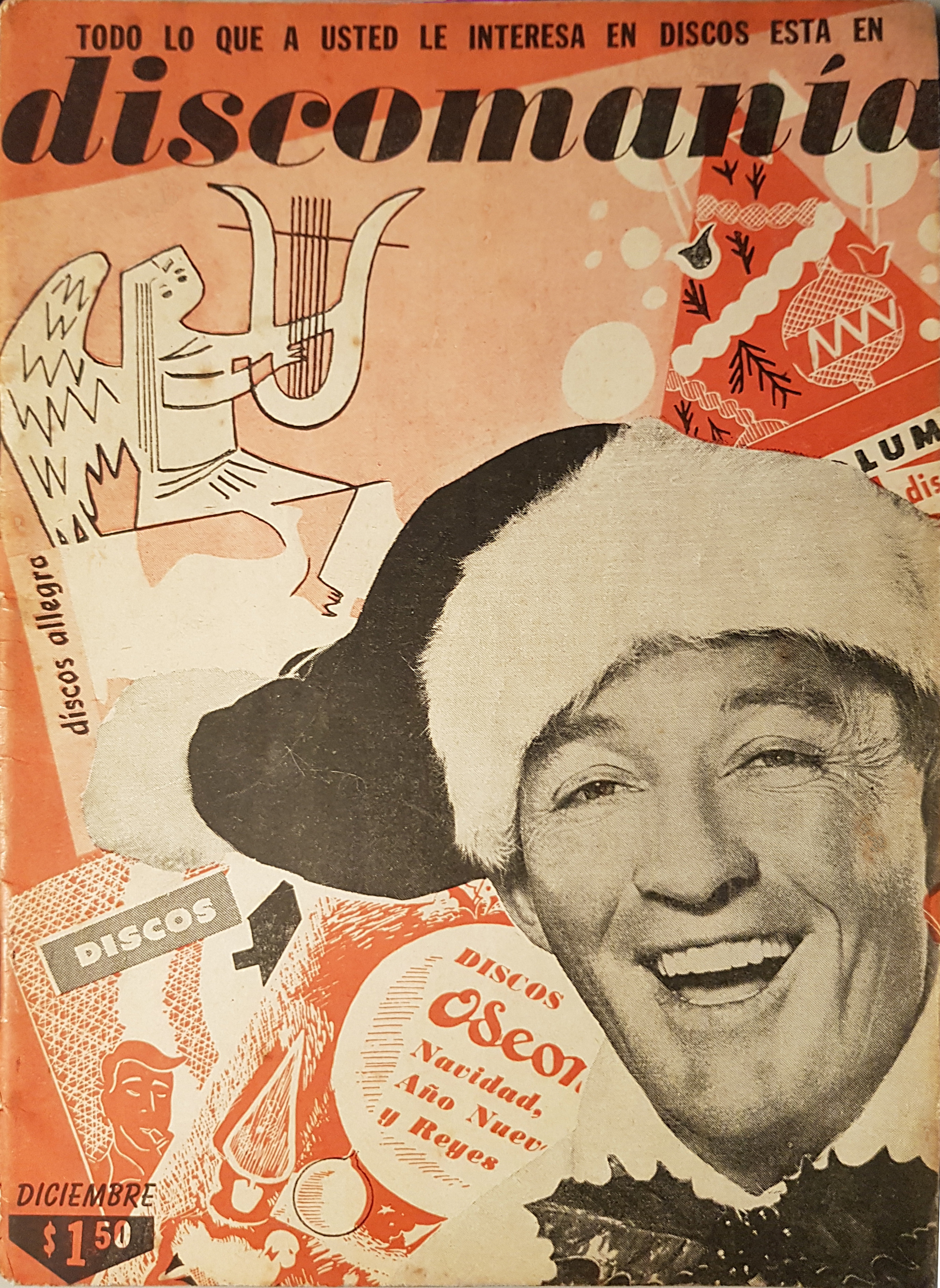
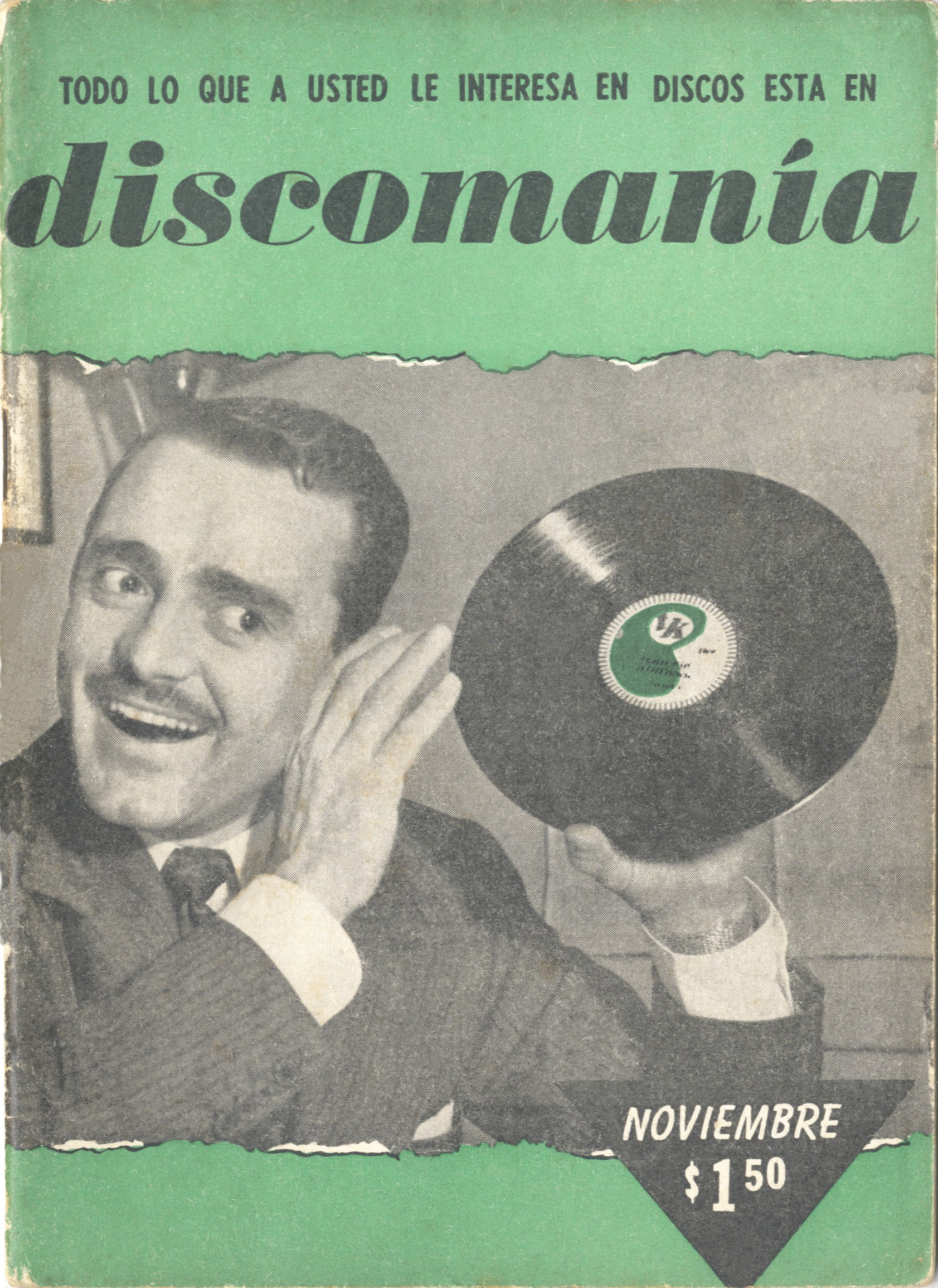
During the editions of the Troilo-TK records, the audiophile Discomania revue was following attentively the label and commented these record issues and artists. Let’s travel through the different highlights and hear how the tango critics back in the days discussed these recordings:


Pick-up #1 Responso-Discepolín, the tribute to the tango poets

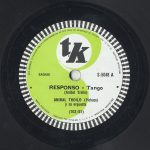
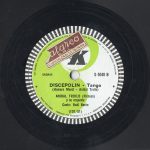
On the 3.5.1951 Homero Manzi the famous tango lyricist died. The instrumental tango Responso is Troilo’s farewell to Manzi. Manzi collaborated on numerous tangos with Troilo and both were connected through a deep friendship. The tango an the B-side on this record, Discepolín, is such a Troilo-Manzi collaboration. It’s sadly their last collaboration and a song which Troilo composed as a tribute to Enrique Santos Discepolo and for which Homero Manzi, who was already deadly ill at the time, wrote the lyrics. Posthumous, one can say that this record became a homage record for both tango poets because Enrique Santos Discepolo also died himself at the end of that same year! The lyrics of the tango Discepolín are delivered by the singer Raúl Berón who will be present during most of Troilo’s TK time together with Jorge Casal, they are Troilo’s main singers from his TK period and will stay with the orchestra until around 1954-55.

“Troilo, Anibal (Pichuco) and his orchestra. Responso, Tango (A. Troilo) – Discepolín, tango (H. Manzi-Troilo) (T.K, S-5048). Troilo offers us a magnificent version of his last tango Responso, written in homage to Homero Manzi. There may be excess bandoneon, but it is justified if we understand that the popular director has wanted to express, in notes, his ‘musical tears’ to the definitive absence of the friend of all hours. On the other side of the disc we hear the posthumous page of Homero Manzi, with musical stanzas by the conductor, which is titled Discepolín. The set of Pichuco is shown with the impeccable adjustment of always, and we note also the happy recovery of the singer Raúl Berón.” [Discomania, ed. 1, Oct. 1951]


Pick-up #2 Bien milonga-De vuelta al bulin, Troilo the movie star

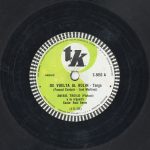
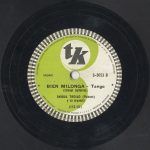
In a side note of Discomania of November 1951 one reads the following concerning the Troilo record TK-S-5053: Ismael Spitalnik, first retired as bandoneonist, and is now in his new role of arranger for great tango bands. He was the one who collaborated in his double task of composer and arranger so that Troilo will shine once more through the tango called Bien milonga. Piano, bandoneon and strings come together effectively in a recording that deserves to be described as outstanding; then we hear, from the movie Mi noche triste (still unreleased) the tango of José Martinez and Pascual Contursi, De vuelta al bulin. Once again this ratifies Raúl Berón’s solid position as a singer, acquired in the típica of the author of Barrio de tango.” [Discomania ed. 2, Nov. 1951]

https://www.youtube.com/watch?v=_hBaKDaYGyQ

Mi noche triste: was the first premiere of the year (January 3, 1952), directed by Lucas Demare. The movie is a free allusion of Pascual Contursi’s life. Troilo intervenes with his orchestra making incidental music, composed by Lucio Demare. He interprets, Mi noche triste (Lita), which in the fiction is sung by the actor Jorge Salcedo (doubled by Oscar Alonso), Ventanita de arrabal and a fragment of Que querés con esta cara (doubled by Jorge Casal) and also some notes of El porteñito.” [Todotango.com]


Pick-up #3 La cumparsita-Inspiración, the updating of the old guard

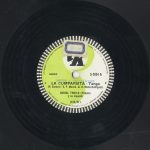
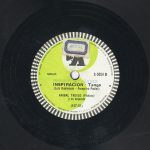
“La Cumparsita, the most executed tango in the world, perhaps the only one that is treated differently by each of the orchestras that include it in its repertoire, is offered by Troilo in a different version. Pichuco does not try to show off making the ‘bellows’ cry. The defect that we point out in the other típicas is that according to the instrument played by the director of the ensemble, La Cumparsita is ‘arranged’ (or disarranged) for the director-performer to abuse the solos. In this register, the orchestral equipment is complete, the strings, the piano and the bellows alternate the rhythmic melodies complementing each other perfectly, without special phrases that in most cases only serve to distort the original sense of the score.

Returning to the recording of Troilo, on the other side of the record: Inspiración by violinist Peregrino Paulos, with lyrics written much later by Luis Rubinstein. This tango, had the peculiarity of being composed without lyrics, and was in that form well received by the public. At the time, the melody was forgotten and replaced by other successes, when Rubinstein, years after the composer disappeared, expanded it with his own verses. With these Inspiración made a triumphal comeback to occupy a privileged place among the  music of the típicas. The curious thing is that after this initial success it returned or fell another time into oblivion, to reappear, years later, as an exponent of the tangos of the Guardia Vieja, but again without lyrics.” [Discomania, ed. 5, March 1952]


pick-up #4 Tanguango-La violeta, the invention of a new rhythm!

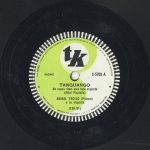
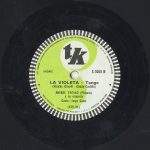
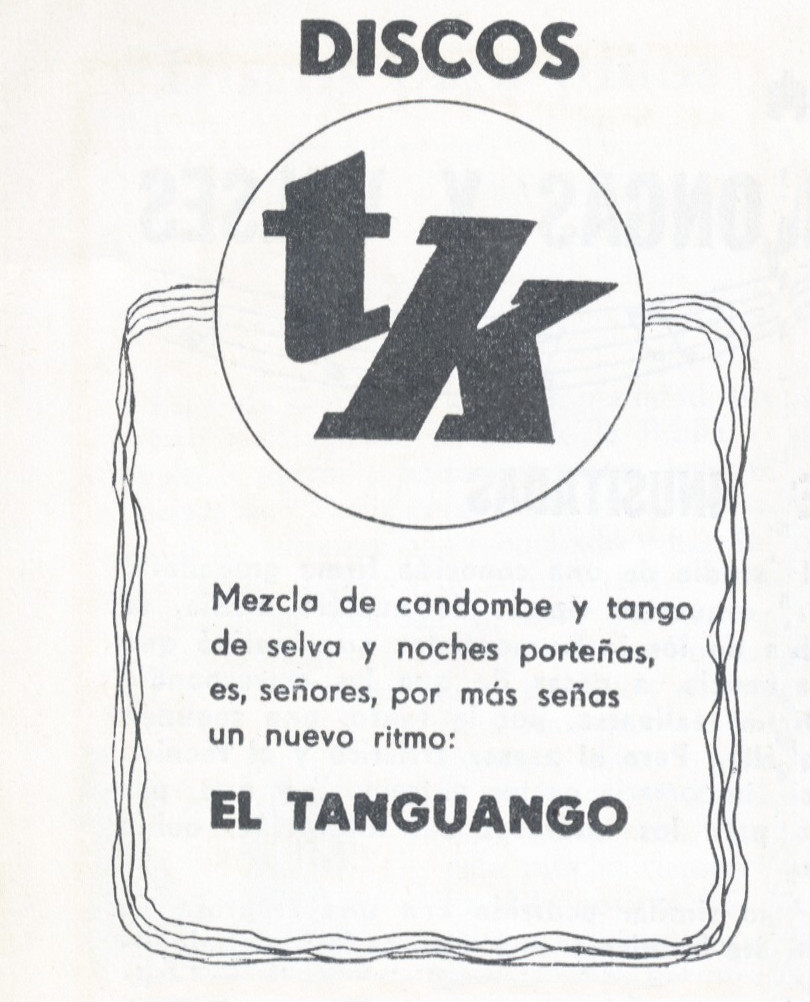
Here is the ninth Troilo record which had been announced by TK in an advertisement as to be a brand new rhythm, the Tanguango! Maybe you remember, numerous orchestras tried in the past to come up with new rhythms. The most successful was certainly the invention of the milonga of the city (milonga ciudadana) by Sebastian Piana and songwriter Homero Manzi back in 1931. This newly presented rhythm lead to a permanent new tango sub genre to which we still dance today in the modern milongas. Other such new rhythm creations were limited in time like tango rumba or Canaro’s experiences with Tangón-Milongón which found actually a larger adoption in Uruguay. The Tanguango as they called it is in that regard not a dead end. It is indeed very typical of Astor Piazzolla’s music with it’s sometimes shifting rhythms from tango to milonga (candombe in this case) and vise-versa. In this context I remember also the piece Bordoneo y novecientos by Osvaldo Ruggiero which also switches back and forth from milonga to tango. To my big surprise, at a festival some years ago I got myself caught by Stazo Mayor and Alfredo Marcucci performing such a rhythm shifting piece while dancing!

TK ad in 1951

TANGUANGO, thus capitalized, at the outset this exceptional composition of Astor Piazzolla was quite a headache to the popular Troilo, who came out to break molds with a plausible sense of avantgarde. Not to say that he was vexed or insulted, but if, for the first time, he received an unforgettable ‘whistle and boo’ when he was publicly performing the piece. But, at the second live performance of the Tanguango, Troilo was greeted by those who had hissed him before. With ‘bongo’ and ‘tambora’ and a great orchestra unfolding, Píchuco [Troilo’s nickname] recorded this version in which great and serious hopes are credited. And by sharing them fully, we extend our applause and our adherence to those who, the performing artists and the recording company, have put their soul and their efforts in the achievement of this new manifestation.[Discomania]

When I was listening for the first time to this record, I had all sorts of associations in my head. Once I was in Africa at the Congo River than it had this modernist character coming after the drum part. It’s crazy! I can imagine that some people had a difficult time to listen to it for the first time and not being able to manage their feelings …


Pick-up #5 Moving from Emelco to Splendid recording studios, Cenizas-Uno

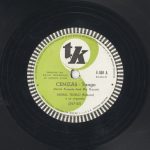
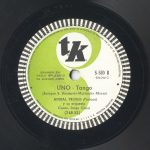
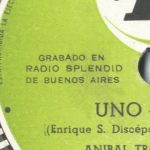
In the May 1953 issue of Discomania there is a review of Troilo’s record S-5110 Cenizas on the A side and Uno on the B side. This record is discussed as a technological turning point as the first record of the Troilo TK series to be recorded at the studios of Radio Splendid. This improved greatly the quality of their records which were known up-to-date as terrible sounding! The article says this in a very polite and diplomatic way:

Troilo TK-S-5110
* José Maria Rízzuti, in collaboration with Emilio Fresedo, wrote quite some pages of our tango. Today, Aníbal Troilo, with his orchestra gives us impeccably his version of Cenizas, a sentimental tribute that, as a posthumous memento, José Maria Rizzuti composed and dedicated to his girlfriend. The orchestra with its habitual seriousness, executes very well this page, that by the intention of its content and substance, deserves to be treated in the given form. On the other side, the well-known tango Uno, which not many years ago was one of the tangos that was on everyone’s lips. This work, with a melodic line, is a worthy combination with the previous side. The vocal interpretation of Jorge Casal is carefully well done, and the technical impression of both matrices has been satisfactorily performed. The tonal differentiation that is established in this recording with respect to the previous ones of the same label, is due to the fact that the recording was made in the studios of Radio Splendid, more apt for good sound than the sets at Emelco.” [Discomania ed. 11, 15.5.1953]

This Astor Piazzolla arranged version of Uno is very interesting as it doesn’t have the evenly pronouced triplet on the outro of the main refrain melody as on the first recording with Alberto Marino from 1943. The 1952 rendering is smoother and Jorge Casals voice very convincing! This could make it an interesting pick for an accessible TK tanda.


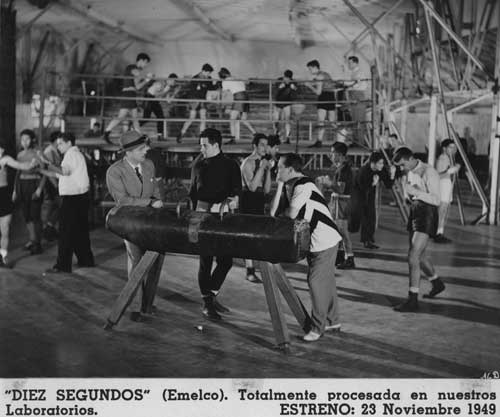
The Emelco studios and the deficient sound

From Emelco’s movie Diez segundos (1949)

The Discomania article shortly mentions in the end that the previous records of TK were recorded at the Emelco movie studios which without any doubt explains the low sound quality of the first TK recordings. When you listen to these Emelco recordings, it is as if the sound stage is quite fare away. It could have been that they had problems with arranging the microphones around the orchestra. In another edition of Discomania, I found this short news: “A new type of recording in our scene is the one performed for the Hawaiian Serenaders on the T.K. record label. It consists of making ‘set’ recordings, as if they were made in dance halls, with applause at the end of the piece. The reverberation sound system has been used in these recordings.” [Discomania, ed. 3, Dec. 1951] It is therefore plausible that this might partially been applied to the Troilo recordings or that they were experiencing with this technique.

As the Troilo orchestra does an interplay of staccato, legato and dynamic (loud and quiet) passages, the sound engineer often has to use the gain control to prevent clipping resulting in wedge-shaped effects in the waveform. In general, when listening to Troilo recordings one would wish a little bit more detail in the legato passages but often it is missing. Therefore, and taken apart that most of the later Troilo LP and CD transfers have their own problems being badly done, the Troilo recordings are in their original form as 78-rpm records slightly deficient since the beginning of the RCA Victor period. They are not optimal in the rendered detail. As if the microphones were misplaced on purpose to prevent too much dynamics. I can imagine that recording Troilo’s music was by fare one of the most demanding tasks for a sound engineer. It was without any doubt one of the most difficult orchestras to record correctly. So I guess if TK was collecting experiences, doing it with the Troilo outfit was the worst case scenario and certainly the most challenging!


Pick-up #6 Malena, Mensaje, Ivette, Un momento and La cantina

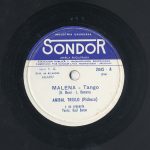
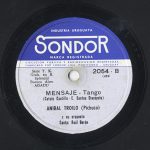
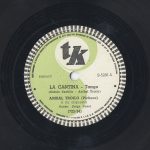
If the TK-S-5110 Cenizas Uno record is the qualitative pivot point of Troilo’s TK recordings, there are still quite a lot of Raúl Berón and Jorge Casal recordings which date from the sound improved period! Like for instance the very nice Berón Malena interpretation or the great recording of Mensaje or Ivette. No reason to be sad, even some from the more difficult Emelco recordings have quite acceptable sound like the beautiful vals Un momento. If you want to discover the voice of Jorge Casal try his interpretation of La cantina (well-known from the Caló-Podesta recording from the same year, 1954) and Uno.


Pick-up #7 Edmundo Rivero’s guest appearance and the revival recording

For all Edmundo Rivero fans there is good news during Troilo’s six years lasting TK contract (1950-1956) there is one revival record with his emblematic singer of the late 1940s who took his retirement from the orchestra at the end of the RCA Victor period back in 1949. He comes back for one single record, TK-SB-35003, and records Sur and La ultima curda.

Edmundo Rivero who retired from the Troilo orchestra in 1949, visits Troilo for one single record at TK in 1956. They record together “La ultima curda” and “Sur”. He himself started to record as soloist under the TK label since 1954.

The first recordings with el polaco, Roberto Goyeneche and Ángel Cárdenas

In 1956, Roberto Goyeneche and Ángel Cárdenas come to replace Raúl Berón and Jorge Casal. With Roberto Goyeneche, Troilo will record until the early 1970s! These are the very last Troilo TK recordings. With Roberto Goyeneche, Troilo records the following TK titles: Bandoneón Arrabalero, Calla, Milonga que que penas canas and Cantor de mi barrio and with Ángel Cárdenas: Quien, Chuzas, Vamos vamos Zaino viejo, Callejón and Qué risa.

The típica Aníbal Troilo performing at the at El Club Comunicaciones with his singer Roberto Goyeneche

The TK-Sondor Uruguay connection

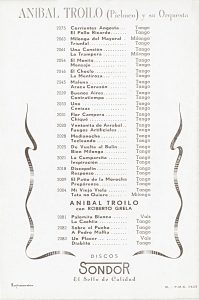
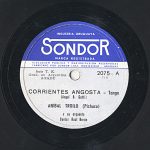
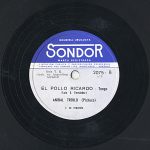
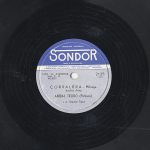
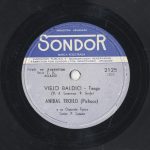
Like Music-Hall, TK also was interested to license its repertoire to foreign companies to increase sales on their repertoire. They quite simultaneously got a deal with Sondor in Montevideo, to issue the Troilo series in Uruguay.

The Troilo TK records were issued from the same matrices in Uruguay but with a blue white Sondor record label and some of the A-B sides were differently recombined as compared to the original Argentine issues. The original matrix number is mentioned under the Sondor record number in smaller print.


The TK Polydor Japan licence and later TK vinyls reeditions

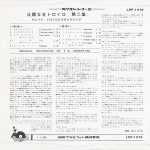
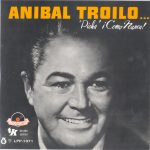
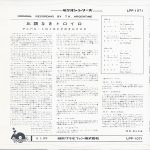
I cannot precisely date this Japan vinyl reedition but judging from the fact that the size is still 10″ I would guess that it’s from the mid-1950s. It’s based on a deal with Polydor in Japan which allowed the Troilo-TK recordings to be issued in Japan. This series is also of perfect fidelity as compared to the original recordings!

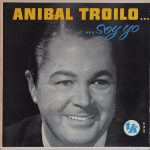
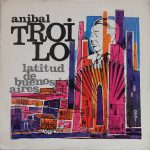
Among later vinyl reeditions are first of all TK’s own 12″ series from the early 1960s with a beautiful cover design:


The end of TK

Between 1963 and 64 the record department of Inter-Bas was transformed through a financial transaction into a new structure called Fenix S.A. which inherited the TK catalog and brand name. The remains of the company Inter-Bas became a record pressing plant. Fenix S.A. continued to release under their new record label called also Fenix mainly Jazz artists with a rather mixed success. Since the new Fenix settlement the TK repertoire became frozen and passive. The TK-discography I have seen, stops around the year 1960 with some last recordings of Alberto Castillo with the orchestra of Angel Condercuri.
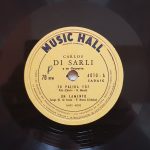
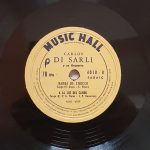
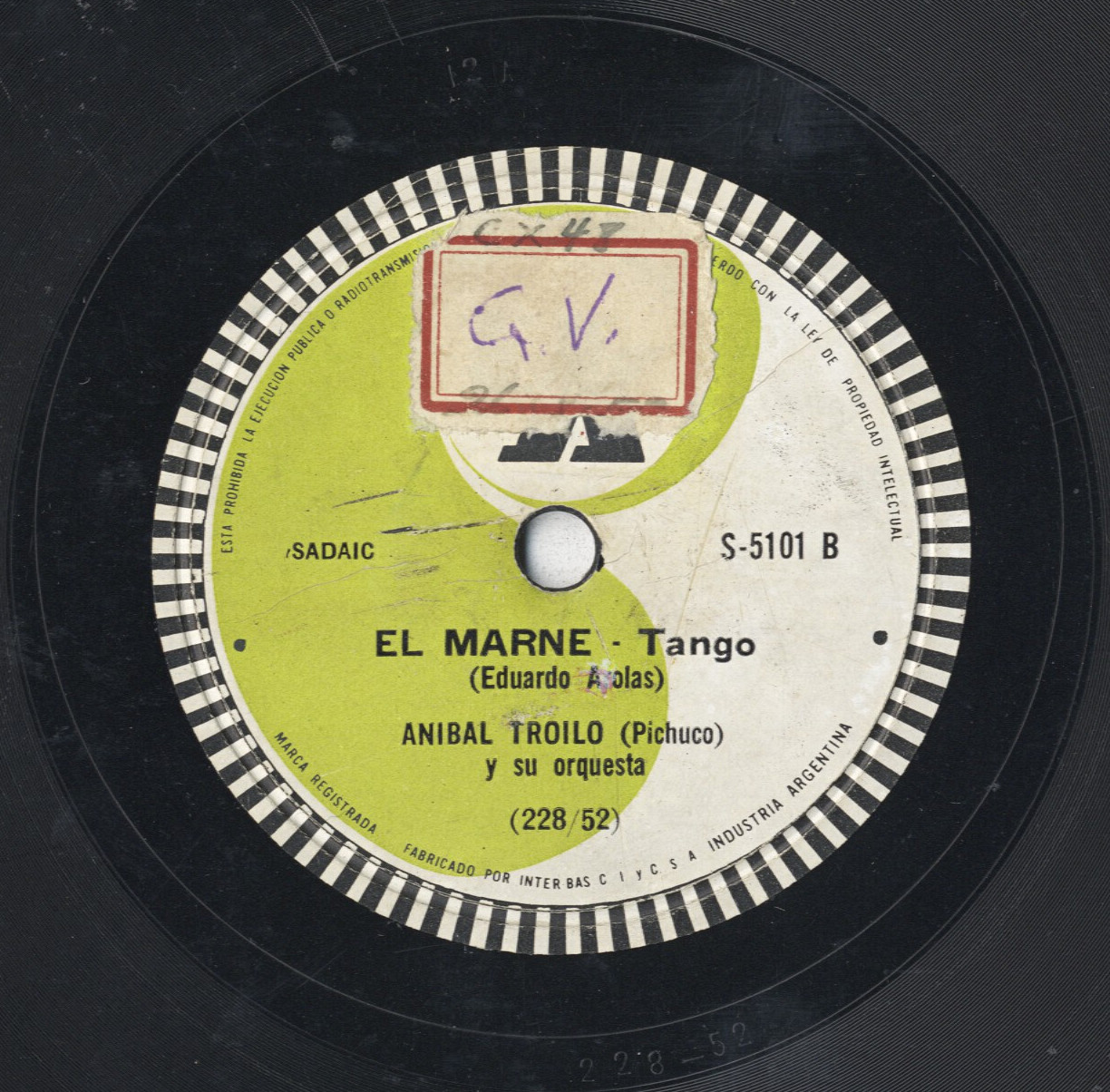
The correct version of El Marne as recorded by Troilo on 78-rpm for TK: TK-S-5101-B 228 El Marne 1952

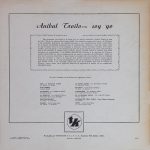
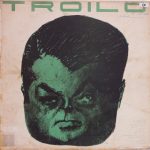
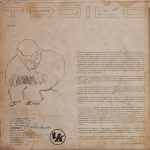
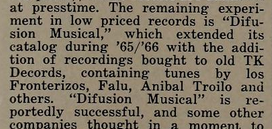
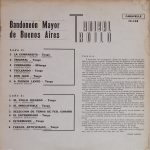
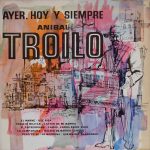
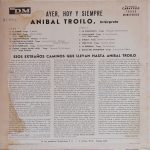
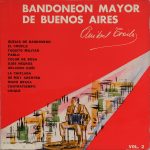
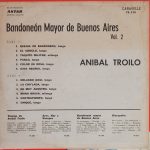
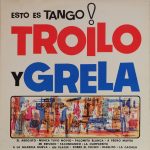
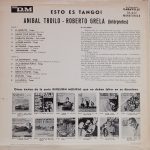
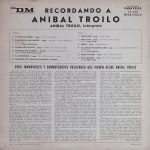
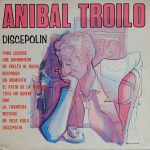
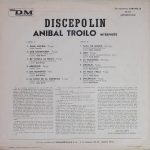
Some years later, 1965-66 the low budget subdivision of Music-Hall, Difusión Musical, extended its repertoire in buying the historic TK catalog from Fenix S.A. They were said to be very successful with their low priced reissues of past titles. The name and brand TK seemed to have stayed with Fenix S.A., hence they called the old TK catalog Repertorio Caravelle in order to circumvent the use of the TK brand name. “Del Repertorio Caravelle” is therefore written on all DM records dealing with TK recordings. The vinilo Troilo-Grela contains all Troilo-Grela TK recordings. On the record Ayer, Hoy y Siempre of DM there are two errant tracks which were not recorded by Troilo: La Bordona and El Marne. They seem to be later tracks recorded by the Orquesta Maffia-Gómez in 1959. This embarrassing error was passed onto the later CD Sus Mejores Momentos – Aníbal Troilo – Orfeón Records 1999!


The LP reissues and Eurorecord’s Archivo TK

As an overall evaluation, the TK series, even after the change to the more professional recording studio at Radio Splendid stays underneath the sound quality of the former RCA Victor recordings. In theory, the 1950s TK recordings should have been better as the state of art in sound recording technology had improved since the 1940s. But as a matter of fact the Troilo TK recordings have to be situated under the RCA Victor sound standards of the 1940s! Additionally I would like to add that the currently available CD series Archivo TK of Eurorecords makes the TK repertoire appear as to be worse as it really is, adding sometimes to the degraded impression. Their CD-transfers were not optimal and some of the tracks were initially better recorded than the CDs of the Archivo TK series present them! It’s also astonishing that the first TK vinyl reeditions are very faithful and have very good sound! Even the later DM (Difusion Musical, Repertorio Caravelle) editions which date from the late 1960s when TK repertoire got merged with Music-Hall have very fine fidelity and compare very well to the original recordings.

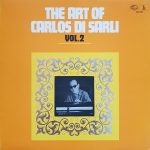
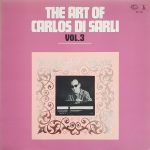
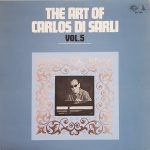
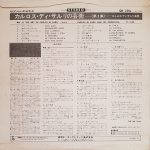
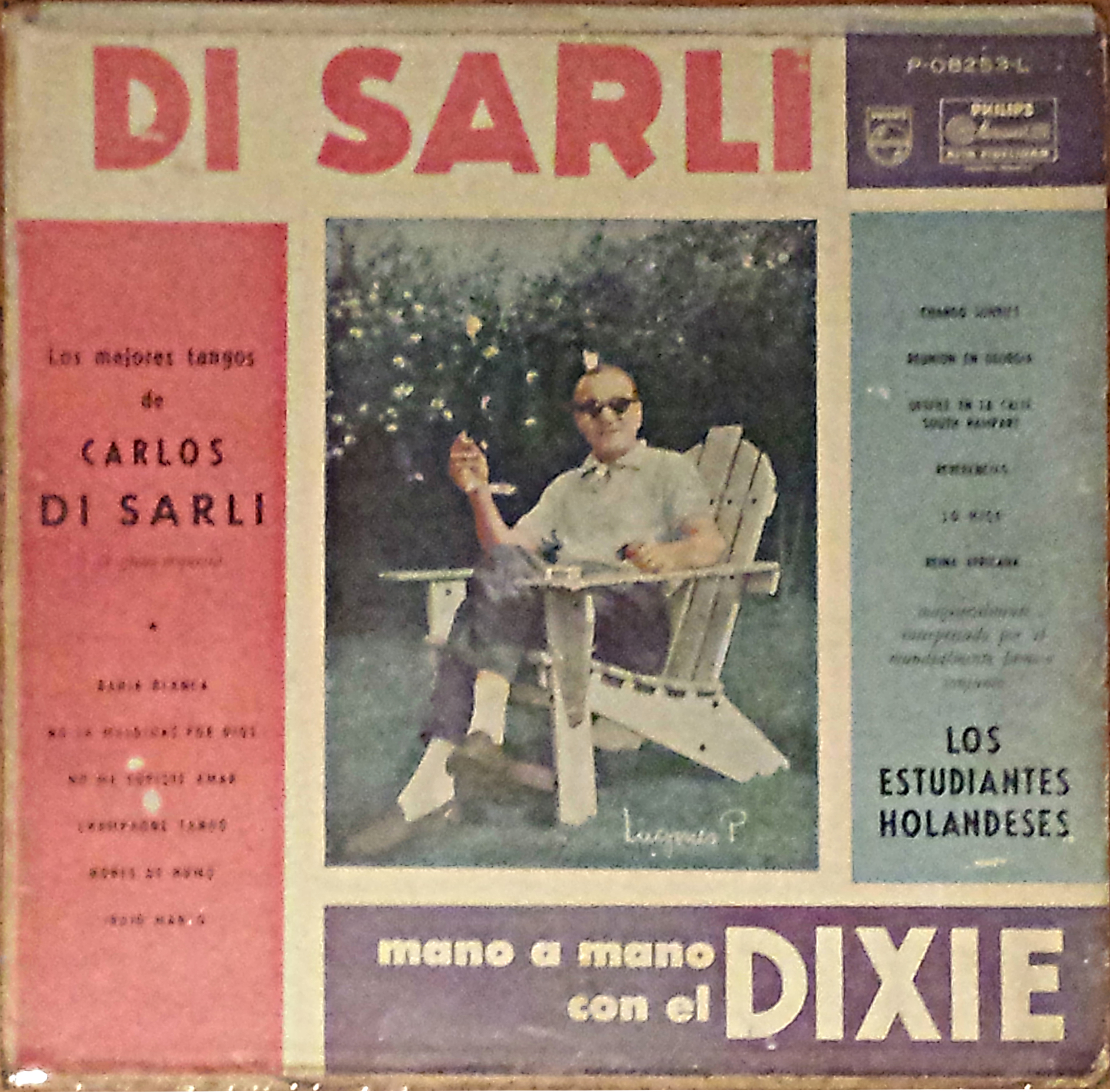
Discomania – Carlos Di Sarli records the first tango ‘long-playing’ vinyl record

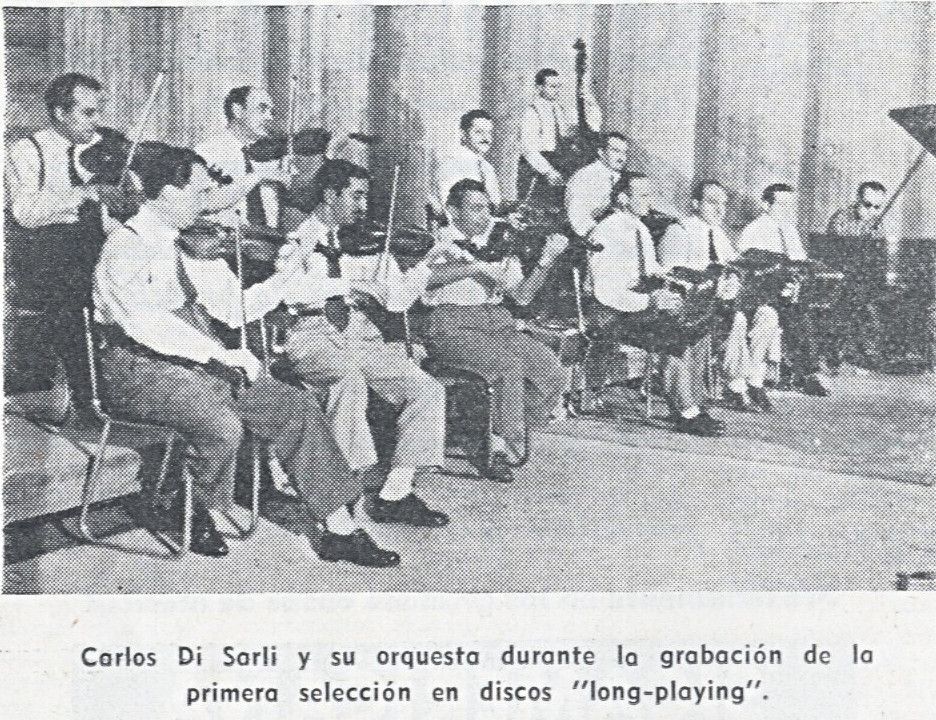
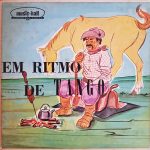
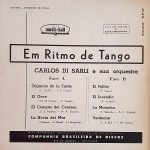
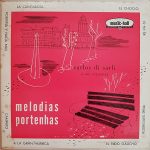
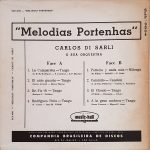
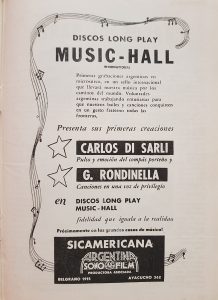
While I was browsing through a pile of Argentine Discomania revues from the early 1950s, I found this interesting interview with Carlos Di Sarli which I would like to share here. It was made during the rehearsals of the orchestra to prepare the first recordings at the brand new record label Music-Hall and it gives a very interesting insight on the scope and concept of this astonishingly progressive and well done recording project. It seems that in the beginning only around 5 records were planned with a total of 20 songs. And that the initial idea was to conquer new markets outside of Argentina, like Brazil, the USA and others. In that regard the use of vinyl makes perfectly sense as the format was about to spread from North to South America and it has by nature a better transportability either as flexible and unbreakable records or as tape copies. It also looks like as if the Di Sarli MH-project was not only meant to be distributed “for export” but also as an intercultural exchange where other local artists would share some tracks on the same albums with Carlos Di Sarli.

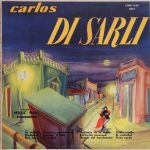
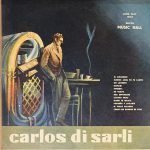
The initial records, though produced in vinyl, were quite short 7″ records with only 2 tracks per side. Later they would grow to 10″ with 4 tracks per side and by the end of the 1950s, they were edited on a series of 12″ LPs with 6 tracks per side. That’s the contemporary LP-format.

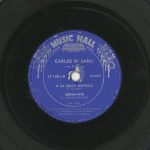
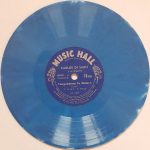
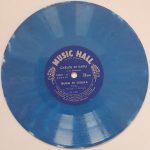
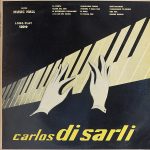
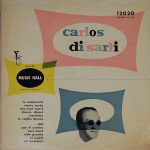
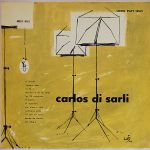
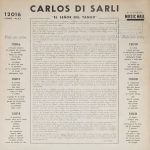
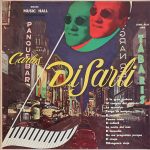
Here is how the original 7″ record series looks like, it’s the very first record, LP-1001. The size is what we know later as 45-rpm singles but these were dobles, 2 tracks per side in 33,33-rpm speed:

It took me some time to understand that these small vinyl dobles were the original releases. In the beginning I was thinking they were later reissues and that vinyl record production started some years later in Argentina (see my previous articles). This was really a big surprise to find out, that these were actually the very first tango vinyls ever produced in Argentina!

See here for the interview which back in 1951 must very much have been a scoop in the Argentine music industry.

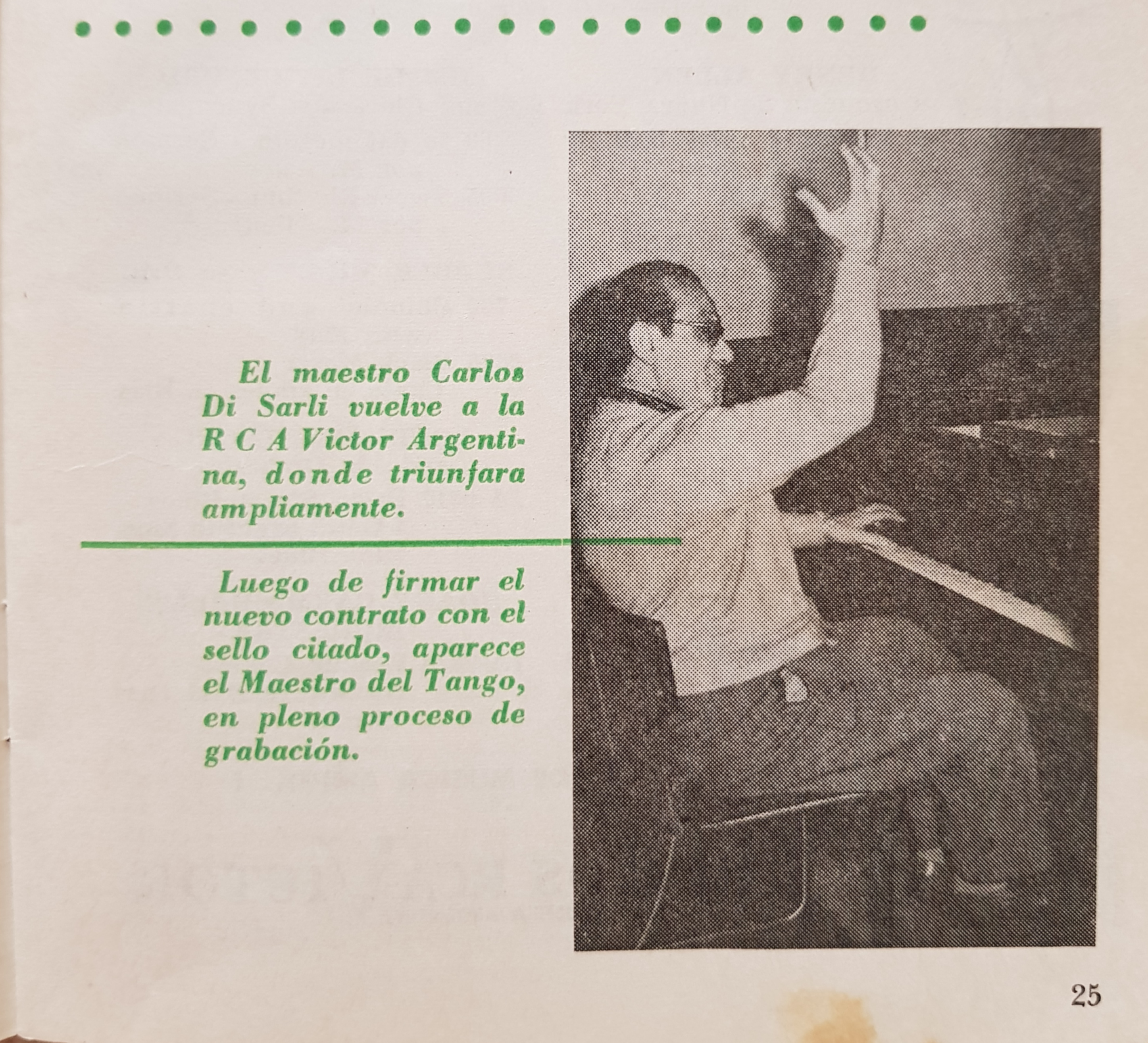
Carlos Di Sarli records his first ‘long-playing’ record

A report by Xavier Rouge

Being a reporter for a record magazine has its laps. The reading public is very demanding and wants to be informed of all the novelties of the recording industry. And this is a very interesting novelty. It’s about our first Argentine artist to be recorded on vinyl: Carlos Di Sarli.

We are heading to the studios of Argentina Sono Film, and we meet with Carlos Di Sarli, who is rehearsing at the front of his orchestra before definitively impressing the fonomagnetic tape that will later be poured into L.P. He stops with his activities, and taking advantage of the rest, we hasten to interview him.

“How was the idea of ​​recording on ‘long-playing’ born?” We asked.

“When an Argentine orchestra travels abroad, it usually gets a warm and successful welcome, this means that Argentine music is very much appreciated. So why not record it on ‘long-playing’ albums, so that our authors and musicians are known by all audiences in the world? That’s how the idea was born.”

“Yes, but there are no ‘long-playing’ record factories in our country yet.” We said.

“That was solved in the following way: we record in the studies of Sono Film onto fonomagnetic tape, that later is sent to the United States, where it is formed into ‘long-playing’ records.”

“I’m going to give you another interesting detail,” he adds, “As ‘long-playing’ records bring together several compositions, 40% of their surface is dedicated to the national music of the country to which they are directed, and the remaining 60% is occupied by Argentine music. That is, if the discs are directed to Brazil, for example, the percentage is distributed in choros sambas, marchinhas and in between tangos, milongas and waltzes.”

“What are the compositions you have chosen for the phonoelectric recording?”

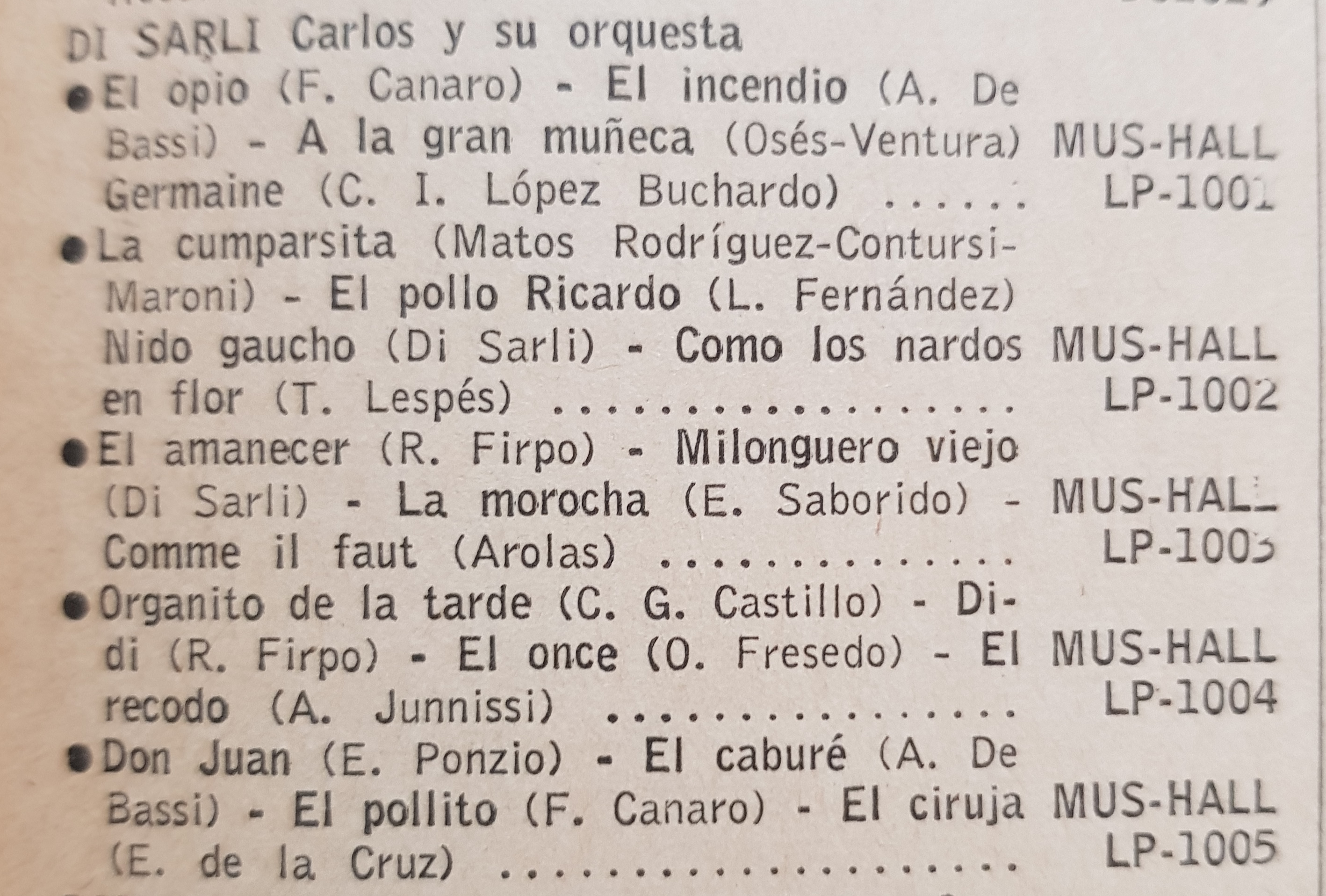
“We have made a selection of twenty pieces, among which are: El organito de la tarde, Didi, El 11, El recodo, Don Juan, El caburé, Nido gaucho, Como los nardos en flor, El pollito, El ciruja, and others that I do not remember right now. These are the titles of the típica music part but I can advance you that I will share the responsibility of recording with artists of the stature of Giácomo Rondinella and Sagi Vela.”

“Must we wait long before we can appreciate these recordings?”

“At the moment, two representatives of Music-Hall are in the United States, finalizing the preparations to launch on the market the first series that might be appreciated by the public.”

“In fact,” we said, “this is also for you a comeback to the world of the record, because you didn’t record in a long time.”

“Effectively, and I am already excited to hear the final version poured into the plastic. Okay, guys, I’m sorry to have to interrupt this friendly talk, but we must continue rehearsing.”

We say goodbye with a handshake, and we leave with the pleasant feeling of knowing that we have now our own ‘long-playing’ recordings.

Revista Discomania, Buenos Aires, December 1951, pp. 42-43


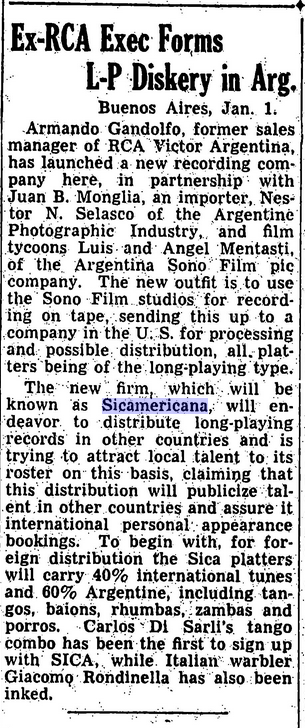
Variety International, Jan. 1952 Issue. The founder of the Music-Hall label, Armando Gandolfo was an ex-RCA sales manager!

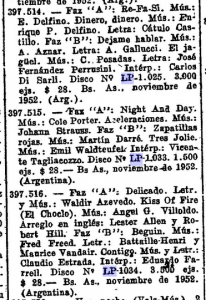
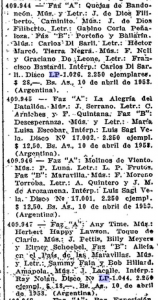
Extract from a record catalog of March 1952, showing the initial 20 Music-Hall tracks

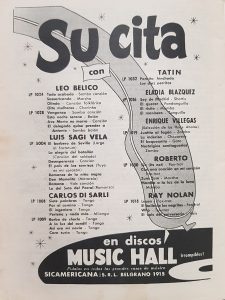
In the end, this ambitious project was downscaled and records were mainly sold in Argentina and Uruguay (there licenced to the local label Sondor). The recordings were made on tape in the studios of Argentina Sono Film in Buenos Aires in a magnificent recording room as Discomania states, and were then sent to the vinyl plant in Peru where the records were produced and sent back to Argentina for domestic distribution. It could be that the stampers were produced elsewhere, like i.e. the USA.  While I was looking at the original releases, I recognised that on the later records an alternative recording location is indicated on the record label: “Grabado en los estudios de Radio Splendid“, it can be verified on LP-1026, LP-1042 and LP-1050. This strongly suggests that they stopped using the Sono Film recording studio for the last records and that the final 24 MH Di Sarli titels were recorded at Splendid’s studios as a replacement.

In March 1953, Juan Bautista Monglia sells his shares of Sicamericana, the commercial entity behind Music-Hall, to Héctor Noberto Selasco. This makes Selasco the strongest shareholder and manager of the company. When the articles of association were first published in March 1952, Juan Bautista Monglia, Héctor Noberto Selasco and Armando Gandolfo, ex-RCA Victor sales manager, all had an equal share in the company. There is actually a coincidence between the capital restructuring of the company, and the changing of the recording studio. On the first record covers Argentina Sono Film was indicated as “productora asociada” of Sicamericana S.R.L. and it seems that they stopped the coproduction when Sicamericana shrinked to a hierarchical one boss structure. By the way, Wikipedia mentions that only two years later in 1955, Lucas and Atilio Mentasti owners of Argentina Sono Film were being arrested during the Liberating Revolution (Revolución Libertadora) which ended the second presidential term of Peron therefore there could be also political circumstances involved which left the Sono Film studios impracticable.

It’s important to mention that the Music-Hall project was very progressive and probably achieved the first Argentine commercial recording with a reel-to-reel tape recorder and a resulting vinyl record production. It’s still in mono but the tape master brings a new flexibility and mobility into the recording process. The studio and the record plant can now be easily at different remote locations.

At a later period, after the maestro’s departure, some of the Di Sarli MH records were also commercialised in Brazil and Japan but without the announced guest artists. Music-Hall licenced the repertoire to the Sinter label in Brazil and to Seven Seas in Japan.

Export MH records, produced in Brazil (Sinter label) and Japan (Seven Seas)

While rethinking the business model from export to a mainly domestic distribution, the whole 33-rpm vinyl format turned out to be a burden for the Music-Hall label as most of the record players in Argentina still had one speed in the beginning of the 1950s: 78-rpm. Only the new record players had 3 speeds and who would buy a new record player just to listen to Di Sarli? In order to get a better market penetration, in a later phase of the project, a lot of hybrid records were therefore produced from the same titles to achieve backwards compatibility. That’s around the same time when Odeon and RCA themselves launched their own dual distributions: on 78-rpm shellacs and at the same time on the new vinyl format. The first 78-rpm Di Sarli Music-Hall edition was published on the 26.11.1952 and is a very curious hybrid because it was in the format of a 7″ record running at 78-rpm speed and pressed in vinyl!

The first 78-rpm re-edition was made on 7″ vinyl, this is record 15001, Tangueando te quiero – Quien te iguala, issued on the 26.11.1952 on blue marbled vinyl. They mention on the cover “78 Velocidad normal”

From the last recordings, LP-1050 (only 750 pressed copies), LP-1070 (pressed also as disco 4011 at 1540 copies), LP-1079 and LP-1085, it seems nowadays impossible to find any 7″ vinyl copies. During the last moments of their collaboration with Di Sarli, Music-Hall went massively back to a more conventional support, the classic 78-rpm shellac. It looks as if the vinyls LP-1070, LP-1079 and LP-1085 were issued in very low quantity! This is also standing to reason because from these last 3 vinyl records I have never seen a single picture. According to my research, LP-1070, was also published with a different record number and on a different support, as disco n° 4011 on a doble 78-rpm shellac. So there might be another chance to get these difficult to find titles on this shellac series:

The 4000 series was actually produced as 78-rpm shellac records with 2 tracks per side, another curiosity! At least LP-1070 was (re)-issued as record 4011, which is a 78-rpm shellac doble. The 4000 series had a yellow label.

The first MH Di Sarli vinyl records were initially published at very high numbers, at an average of around 14000 ex. And were then gradually reduced to 5000 ex. since the vinyl record number LP-1010, the 10th record, and ending with a very small-circulation of 2000-750 ex. or even less for the last vinyl records! The numbers of produced copies were published in the Boletín Oficial which contains the mandatory legal deposit of every domestic publication. Though I couldn’t find any publication of the release dates for the last 3 vinyls but this is maybe related to some missing Boletíns of the year 1954 in the archives.

As an overall evaluation I would like to mention that these 84 Di Sarli Music-Hall recordings were all very well done, they sound great, especially the original 7″ vinyls. When you listen to a well-preserved copy, you get indeed the impression that the maestro himself is descending from the heavens, MH themselves called their sound fidelity equal to reality, fidelidad que iguala a la realidad. This high sound quality is though not always maintained on later vinyl re-editions, especially the 12″ vinyls often have less good sound. They partly messed up the original equalisation and added on the latest generation LPs some reverberation. There are also some strange problems with the gain where the sound engineer started the transfer too loud and corrected the gain only later after the first bars. On the earlier 10″ and 12″ vinyls there is very muffled sound on some tracks which are therefore virtually useless. A few tracks on these next generation vinyl transfers are OK. Also positive to mention, I didn’t recognise any pitch/speed problems on the following generation vinyl transfers like one sadly often hears with other record labels.

On the first 12″ MH LP series from around 1958, 12 of the 84 total tracks are missing, as if one 12″ LP record was never produced (at least I haven’t seen it and I think it doesn’t exist). This is often an indicator that the record label didn’t find back their own material when they prepared for a re-edition years later …

Los Tangos Buscandos de Carlos Di Sarli, Compact cassette Music-Hall 255.001-5 D.M.S. published in 1985

In 1985 Music-Hall issued a compact cassette and on the inlay they marked some titles with the mention “° Temas nunca publicados en LPs con anterioridad”, titles never published on a later LP transfer. Some of these titles are among the hard to find: La misma tarde, Fulgor, Chimentos and Se muere de amor.

The downscaling of the initially ambitious project and the too early adoption of vinyl for the domestic market with all the resulting problems might have contributed why Carlos Di Sarli returned by the beginning of 1954 to RCA Victor. It could also be related to the change of the recording studio, the last 24 recordings were produced at the studios of Radio Splendid. But maybe it was just the end of their contract. There is a lot to speculate which is favored by the circumstance that the initial distribution of Music-Hall seems rather experimental based on a trail and error method. Discomania shows him in their August 1954 edition as to be back at the RCA Victor studios without mentioning any further motives for the change.

Concerning the concept of guest artists, finally, the 7″ vinyl series has numbering discontinuities when we check the discography. During the first 10 records the numbers were all used for Carlos Di Sarli and then there are holes. These missing record numbers were actually used for other artists and genres, like Cole Porter (LP-1033), Herbert ‘Happy’ Lawson (LP-1044) and a lot more. The Giácomo Rondinella and Luis Sagi-Vela recordings were running on a separate record number prefix in order to distinguish the classical music aspect, the LP-5000 series. The LP-1000-series was initially the popular music classification. All these recordings were never published together on a shared record like the initial idea proposed but were juxtaposed on separate records.

It’s much later that Carlos Di Sarli recorded an LP album alongside with another artist. By then he had long left MH and after some years at RCA Victor he joined the Philips label during his last recording sessions with the orchestra. This shared record was published in 1960 and it’s called Carlos Di Sarli mano a mano con el Dixie. Los Estudiantes Holandeses are also known as the Dutch College Swing Band. The record contains a succession of one track by Di Sarli and one swing orchestra track, in ping-pong battle mode, all recorded in a (fake sounding) live environment. In the end his idea of an intercultural concept became a reality!

As we can see now from our future perspective the high goals of the initial Music-Hall project were flattened and a compromise was found. The recordings were nearly exclusively distributed in Argentina and Uruguay and the guest artist concept abandoned. Instead of exporting Argentine titles to the rest of the world, mostly foreign artists were imported into the domestic record market via Music-Hall. The maestro delivered fantastic recordings but they didn’t find any major international resonance back in the days. How would he be delighted to see that nowadays his music is played globally!

Advertisements from the launch of the new MH label in the revue Discomania

And last but not least, see here for a visual succession of the main Music Hall vinyl generations, from the first issue starting in 1952 to the last LP edition from the 1980s. The reverberation was added on some tracks since the 1979 edition. And the edition El señor del tango, red and green/blue monochrome cover, is a reduced two volumes edition, focusing on the most known initial titles.

Based on my research I have put together a discography of Carlos Di Sarli’s Music-Hall recordings. It’s still a work in progress and based on records which are in my collection. The recording dates which are taken from the later CTA CD edition are very questionable and some aspects of the way the last MH recordings were issued are still unclear. The CTA dates are questionable especially when the release date, which implied a legal deposit of 3 physical records at the national archive, is before the recording date, that’s implausible! I would like to get access to the data of the Music-Hall recording book, and as, they used reel-to-reel tape masters for the recordings, the tape boxes might contain the take info and also the recording dates. So there might be a chance to get hold of the correct dates if these tapes and boxes have survived. But as it looks like these boxes aren’t any more in the heritage of the former Music-Hall company. They must have been lost, maybe during their bankruptcy …

If you want to contribute to this document, if you have suggestions or information to share, please mail me.

Carlos Di Sarli Music-Hall Discography in CSV Format
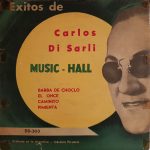
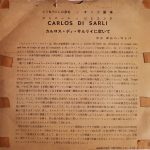
Addendum: Recently, while visiting a friend, he showed me a record from Japan which was issued very close to the original Argentine release date. It’s the same 7″ vinyl format as in Argentina. It is very likely that CTA’s reissue of the Carlos Di Sarli Music-Hall recordings is based on that series. This shows that MH had a much earlier international exchange than I was initially thinking. That could also explain certain questions which were raised concerning the last 3 records which have never been seen and might therefore likely to have ever been published. Maybe the whole series has been published in Japan on Mercury Records Japan in their DD-300 reprint! Interestingly they are in 45-rpm (the Argentine series is in 33.33-rpm speed) which means they were most likely transferred anew from MH reel-to-reel tape copies sent to Japan.

Un Argentino en París

20160506_101157

As you might recall, just a couple of weeks ago on the 13.4.2016 the maestro Mariano Mores passed away. He composed some very famous tangos like Uno, Cuartito azul, Cafetín de Buenos Aires, Adiós Pampa mía, Taquito militar and many others.

Today I received a very interesting 10” LP published on the Odeón label in Buenos Aires in 1954. The titel is “Marianito Mores – Un Argentino en ParísPiano con acompañamiento de órgano y ritmo It is less suited for dancing and has a more recital, jazzy character. The 2 x 4 titles were recorded in France (grabado en Francia) and the vinyl record then pressed and published in Buenos Aires. All tracks are composed or co-created by Mariano Mores. The record number is LDS-182, it is a very low number, so we are most likely very close to the beginning of this Odeón series which might have started as early as 1953 with some Francisco Canaro, Rodolfo Biagi and Roberto Firpo re-editions. You can crosscheck this via Christoph Lanner’s Francisco Canaro Discography, he mentions the LDS vinyl re-edtions in the Electric Recordings Part II (1935-1973). The LDS series produced also Argentine folklore and jazz titles with artists like Atahualpa Yupanqui or Oscar Alemán.

I found an extract of a copyright register with a very detailed description of some of the earliest records in this series alongside with the number of copies printed and the historical price:

Interp.: Oscar Alemán y otros. Disco Odeón No LDS 109. 1.000 ejempl. $ 49,75; Bs. As., 2 de mayo do 1953. (Argentina).
Intérp.: Trío Sánches Monjes, Ayala y otros. Disco Odeón No LDS 110. 600 ejempl. $ 49.75. Bs. As., 2 de mayo de 1953. (Argentina)
Intérp.: Oscar Alemán. Disco Odeón No LDS 111. 1.000 ejempl. $ 49.75; Bs. As., 2 de mayo de 1953. (Argentina).
Interp.: Carlos Gardel con guitarras. Disco Odeón No LDS 112. 1.600 ejempl. $ 49,75; Bs. As., 2 de mayo do 1953. (Argentina).

Source: Boletin Oficial Republica Argentina 2da sección 1953-09-01 (Obras Depositadas Bs. As., enero a mayo de 1953)

Compared to 78-rpm records of the day these early vinyl circulations were very low. The same source shows that for instance D’Arienzo’s 78-rpm record “Don Juan, Sin Balurdo, RCA 68-0236″ from 1950 was republished at 20000 copies in 1953, that’s ~20 times more circulation (plus the first issue)!

7 DE JULIO DE 1953 [...] Faz "A~T Don Juan. Tango. Letra: 
E. Podestá. Música: SI. s Ponzlo. Faz "B": Sin Balurdo. Tango. 
Letra: -Carlos Bahr. Música: J- D'Arienzo y F. Salamanca. Intérp. 
f Juan D'Arienzo y su orq. típica, Disco Víctor NO 68-0236. 
Bs. Aa." 2312163. 20.000 ejempt.- $ 9,96.

I wonder if the declaration of the number of copies was a legal requirement. If that’s the case, it must be possible to get precise circulation figures for a lot of tango recordings.

LDS-182 is the oldest South-American tango 10″ LP vinyl record I have seen so far with a genuine content directly being produced and published on this medium. During the whole 1950s most of the Argentine records were still published on 78-rpm shellac records and sometimes, at a later moment, regrouping vinyl samplers were published. According to what I have been able to verify, the Odeón LDS series was in the beginning mainly meant for such republishing editions until this Mariano Mores creation.

It is said that during the first years his stage name had been Marianito Mores, like written on the present record. Later in 1955, when the Perón gouvernment was brought down by a military putsch, being a peronist, he felt changing his name would bring him a certain protection. He called himself ever after Mariano Mores.

The oldest genuine Argentine tango vinyl production is most probably the Music-Hall 7″ series of Carlos Di Sarli starting with the record number LP-1001 and published in February 1952. On some of these small vinyls, EPs, the production site is indicated with Peru. So most likely they were produced in a plant outside of Argentina. This is certainly something to investigate more in depth … Also the fact that the series shortly after was continued to be published on shellac (which is some kind of a regression).

The following video is taken from the 1953 movie “La voz de mi ciudad” and not directly related to the record. But it contains a nice jam session around the milonga “Taquito militar“.

Please find here the back cover and I invite you to read the interesting liner notes of Cátulo Castillo written on the 25.5.1954, in a few days precisely 62 years ago:

20160506_101208